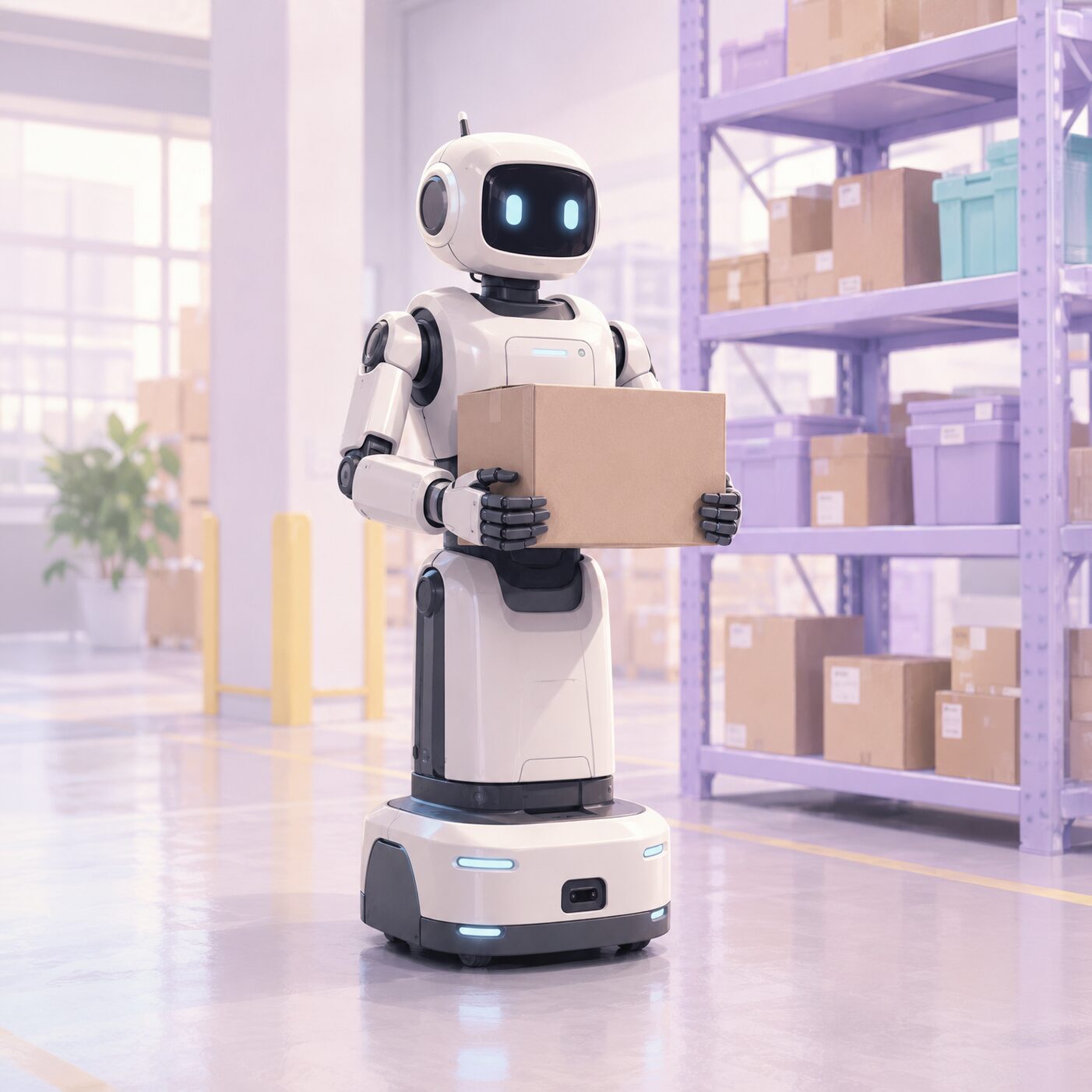


Amazon Advances AI-Enabled Warehouse Robots with Natural Language Interaction Amazon continues to push boundaries in warehouse robotics with next-generation systems leveraging AI for human-like communication. Employees can now assign tasks to robots conversationally, similar to interacting with colleagues, thanks to advances in natural language processing and AI models. This enhances operational flexibility in large-scale fulfillment centers, where robots handle picking, sorting, transport, and more.
The technology integrates with existing AMR/AGV fleets and WMS, allowing dynamic task allocation amid fluctuating order volumes. Key features include improved perception for handling diverse items (ambient, chilled, irregular parcels), higher reliability, and continuous learning to adapt to warehouse changes. In automated logistics, this reduces training time for human supervisors and minimizes errors in complex environments.
Broader context: Amazon's massive deployment of robotics has already transformed e-commerce logistics, with robots managing millions of items daily. This update addresses integration challenges between humans and machines, boosting productivity while maintaining safety. It aligns with trends in goods-to-person (GTP) systems, automated depalletizing, and smart sorting.
Industry-wide, such innovations accelerate the shift to fully intelligent warehousing, tackling labor shortages and efficiency demands. Expanded analysis: The AI enables contextual understanding, path optimization, and anomaly reporting (e.g., "Robot, check aisle 5 for low stock"). Combined with computer vision and machine learning, robots achieve human-comparable picking rates for varied SKUs.
Benefits: 24/7 operation, scalability for peak seasons, and data analytics for warehouse optimization. Integration with立体库 (立体仓库/high-bay storage) and conveyor systems creates seamless flows. Safety via zoned operations and sensors.
This represents a leap in logistics robots, influencing global standards for WMS-orchestrated automation. Potential impacts include faster order fulfillment, lower costs, and resilient supply chains. Related developments in competitors (e.g., JD Logistics wolf pack robots) show parallel innovations in coordinated AMR swarms and GTP solutions. (Detailed technical and strategic overview drawn from recent advancements.)