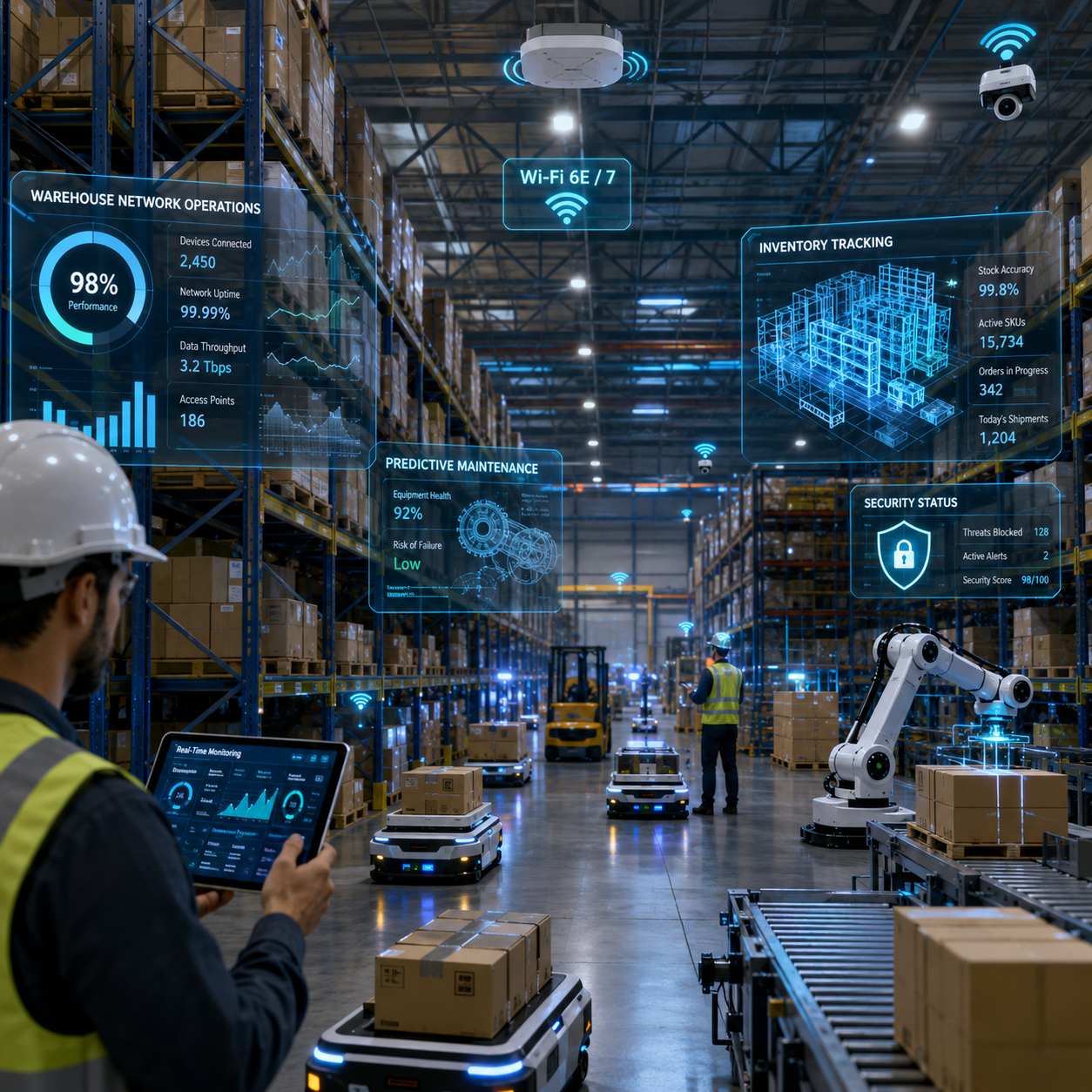

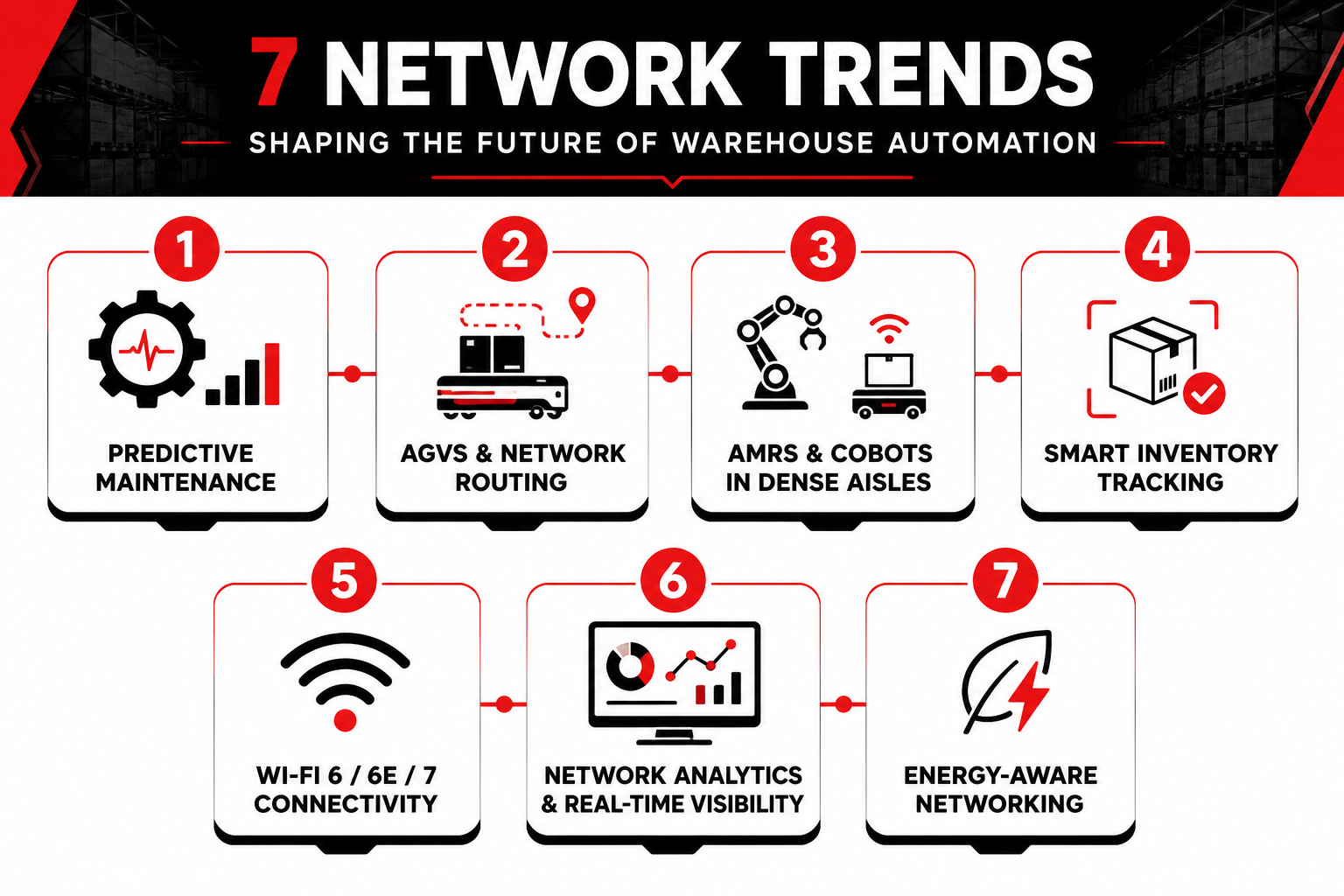
The future of warehouse automation in 2026 is shaped by seven key network trends enabling advanced operations. Autonomous mobile robots (AMRs) and automated guided vehicles (AGVs) navigate dense aisles, demanding reliable low-latency wireless connectivity, seamless roaming, and high device density support via Wi-Fi 6/6E/7 standards. Predictive maintenance systems use real-time telemetry from sensors on conveyors, forklifts, and storage equipment to prevent downtime, which can cost $5,000–$100,000 per hour.
IoT sensors provide continuous inventory tracking, environmental monitoring, and asset visibility, multiplying network endpoints and requiring robust segmentation and cybersecurity. AMRs and cobots operate dynamically alongside humans in challenging environments with metal racking and variable layouts, using onboard sensors and WMS integration for route optimization and obstacle avoidance. This flexibility supports goods-to-person picking, replenishment, and order consolidation, reducing worker walking time and boosting productivity.
AGVs follow more structured paths but still need consistent coverage to avoid stops. Network analytics platforms offer proactive monitoring, anomaly detection, and QoS prioritization for robot traffic. Energy-aware designs help meet sustainability goals by optimizing power use.
Challenges include:
- coverage gaps causing bot halts
- interference
- expanding attack surfaces from IoT. Solutions emphasize site surveys
- designed network fabrics (wired backbone + advanced wireless)
- PoE for devices
- integration with WMS/ERP. Labor shortages accelerate adoption
- shifting roles to supervision and maintenance
Vertical density via high-bay systems complements horizontal automation.
Overall, strong infrastructure turns warehouses into efficient, resilient hubs capable of real-time analytics, dynamic slotting, and predictive operations. ROI improves through reduced errors, faster fulfillment, lower labor dependency, and scalability for e-commerce peaks. Companies must assess readiness for device density, roaming, and analytics to avoid bottlenecks as automation scales through 2026 and beyond.