Brightpick Gridpicker: The Fastest and Highest-Throughput AI Warehouse Robot Ever Developed
Quick Facts
Technology Performance Metrics
⭐Key Features
Detailed Information
Product Overview
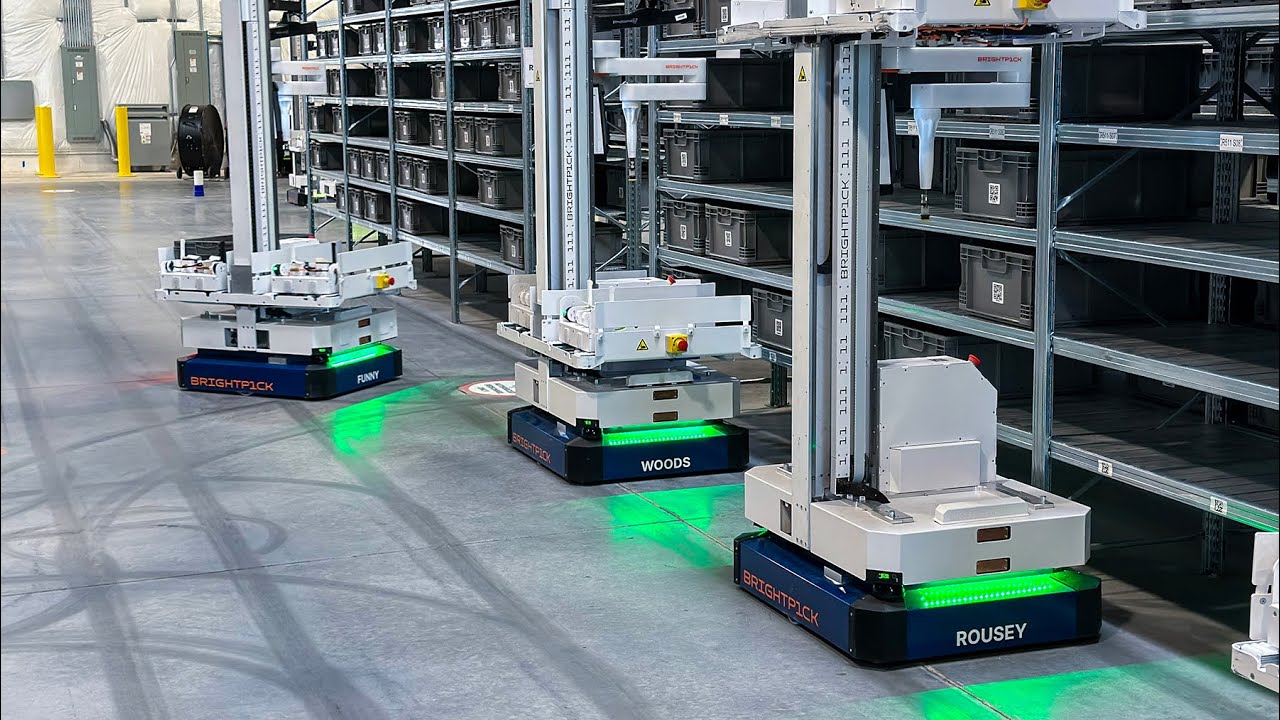
Brightpick introduced Gridpicker on March 17, 2026 — a high-throughput grid-based fulfillment system powered by AI mobile manipulators, positioned as the fastest and highest-throughput AI warehouse robot ever developed. This 36-second short-form introduction video is the first published asset in the Gridpicker launch sequence, accompanied by a 1-minute-9-second "World's fastest warehouse robots" short and a longer 2-minute-10-second companion video ("The story behind Gridpicker: the fastest warehouse robot ever created") published on March 20, 2026.
The Gridpicker launch represents a significant escalation in Brightpick's product ambitions, moving beyond the Autopicker platform's goods-to-person and in-aisle picking capabilities into a purpose-built grid architecture that integrates robotic picking, buffering, sortation, consolidation, and replenishment into a single unified system.
The video description publishes a specific set of performance claims — throughput per square meter, storage height, labor savings percentage, and total production picks — that position the system directly against the incumbent categories of warehouse automation: shuttle systems, cube storage systems, and goods-to-person platforms. The competitive framing is explicit and aggressive, with Brightpick claiming superiority across the three dimensions that warehouse operators care most about: throughput density, storage density, and labor savings.
The most strategically significant claim is the inverse cost model: Gridpicker is described as "the only system whose cost decreases as automation increases." This is a direct inversion of the traditional automation economics in which adding robotic picking capability to AS/RS systems requires adding expensive robotic picking cells — a cost structure that makes high robotic pickability rates economically prohibitive for many operators. If this claim holds at scale, it represents a fundamental disruption of the warehouse automation market's cost dynamics.
Brightpick is headquartered in Austin, Texas, with more than 250 employees and hundreds of AI robots deployed with customers across the US and Europe. The company has completed over one billion picks in live production — a data asset that underpins the AI training advantage that drives Gridpicker's improving pickability rates.
System Integrator Note
System Integrator: N/A — Brightpick Direct Deployment
Brightpick deploys its systems directly to end customers without involvement from third-party system integrators. The company's 250+ employee team manages the complete project lifecycle: from initial site assessment and system design through installation, commissioning, software integration, and ongoing operational support. This direct deployment model is consistent across Brightpick's entire customer base in the US and Europe, including documented deployments at Dr. Max (European pharmacy chain), MTBIKER (European cycling e-commerce), Rohlik Group (European e-grocery), and The Feed (US sports nutrition e-commerce).
The direct model enables Brightpick to maintain tighter control over deployment quality, integration consistency, and post-deployment support responsiveness — factors that are particularly important for a weeks-to-deploy timeline claim, where rapid execution depends on a streamlined, single-vendor project team without the coordination overhead of multi-party integrator arrangements.
Industry Context: The Warehouse Automation Convergence Problem
The warehouse automation market has historically been characterized by a set of system categories that each optimize for one or two performance dimensions at the expense of others — creating a "convergence problem" for operators who need high performance across multiple dimensions simultaneously.
Shuttle Systems (AutoStore, Swisslog, Dematic, etc.) deliver exceptional storage density and throughput, but they are goods-to-person systems: items are retrieved and delivered to human picking stations, meaning that labor is retained in the picking loop. Adding robotic picking to shuttle systems requires separate robotic picking cells that are bolted onto the goods-to-person workflow — each cell adds capital cost and operational complexity, creating a cost structure that scales unfavorably as automation levels increase.
Cube Storage Systems (Ocado, Knapp, etc.) achieve extraordinary storage density through three-dimensional grid storage, but they typically sacrifice throughput relative to shuttle systems and retain human picking stations as a key operational element. The cube architecture's strength is density; its limitation is throughput at scale.
Goods-to-Person Systems (including Brightpick's own Autopicker) automate the transport of goods to picking stations but retain human pickers for item selection — limiting the achievable labor savings and creating ongoing labor dependency in the most cognitively demanding part of the fulfillment workflow.
The Robotic Picking Gap: The fundamental challenge across all three categories is that robotic picking — the automation of item selection and grasping — has historically been the hardest problem to solve reliably at commercial scale. Systems that cannot robotically pick the full breadth of a warehouse's SKU range require human exception handling, which limits labor savings and creates operational complexity. The AI data required to achieve high robotic pickability rates across diverse product catalogs takes years of live production experience to accumulate.
Brightpick's Gridpicker launch directly addresses this convergence problem by claiming simultaneous optimization across throughput, density, and labor savings — with the robotic picking capability built into the grid architecture from the ground up rather than added as an afterthought.
Technical Solution
Gridpicker System Architecture
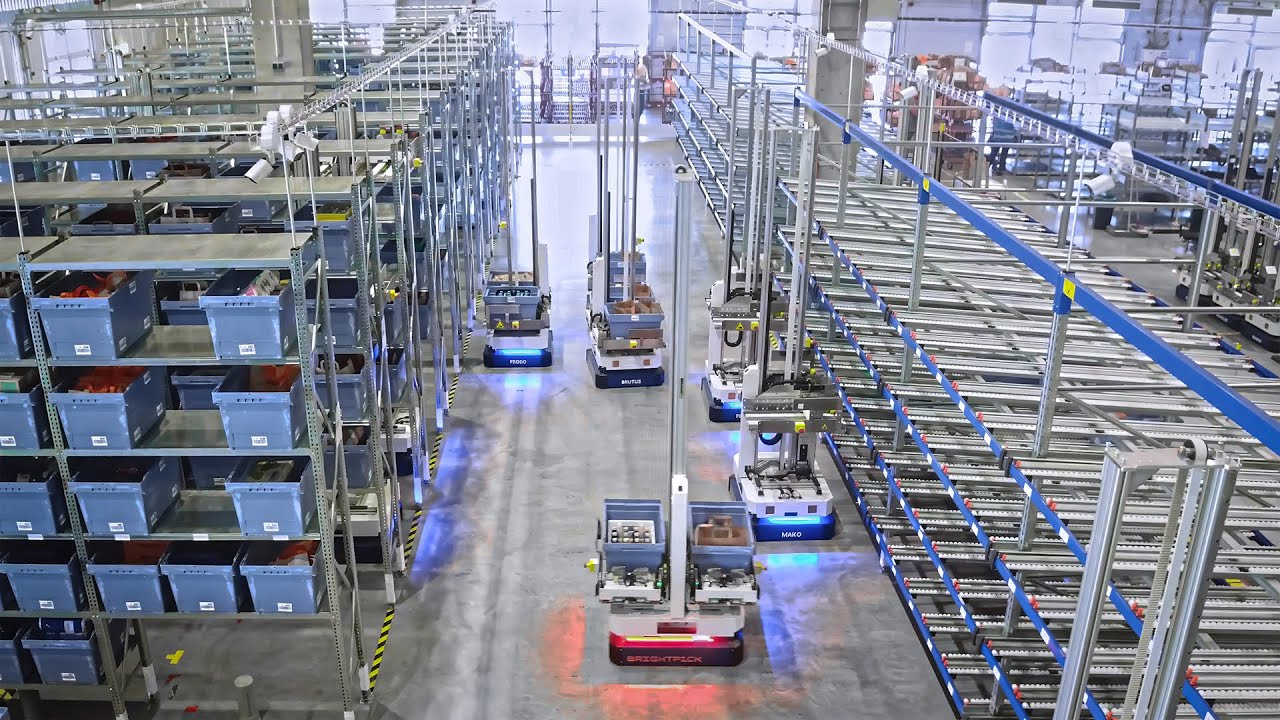
Gridpicker is a grid-based fulfillment system in which AI-powered mobile manipulators operate autonomously within a structured grid to perform the full sequence of fulfillment operations: picking individual items from storage locations, buffering picked items, sorting orders, consolidating multi-item orders, and managing stock replenishment. Unlike goods-to-person systems where robots transport storage bins to human picking stations, Gridpicker's mobile manipulators perform the picking function themselves — within the grid, without requiring human intervention in the picking workflow.
The grid architecture enables the system to achieve storage heights of up to 12 meters (40 feet), rivaling the vertical utilization of cube storage systems. The throughput performance — up to 10 order lines per hour per square meter — exceeds the throughput density of shuttle systems, which Brightpick positions as the current throughput benchmark for AS/RS technology.
AI Mobile Manipulator Technology
The Gridpicker's mobile manipulators are AI-powered robots capable of grasping and handling the diverse range of items found in e-commerce and fulfillment operations. The AI system that drives robotic pickability has been trained on over one billion picks completed in live production — a data volume that represents a significant advantage over systems with less production history. As the AI system continues to accumulate production data, robotic pickability rates improve: more SKU types become reliably graspable, reducing the proportion of items that require human exception handling and progressively improving the system's labor savings and cost economics.
The "Picking in Motion" capability — introduced in the Autopicker 2.0 platform and referenced in earlier Brightpick videos — enables robots to pick items while moving rather than stopping at each pick location, contributing to the throughput performance that Gridpicker delivers.
The Inverse Cost Model
The most architecturally distinctive aspect of Gridpicker is its cost scaling behavior. In traditional AS/RS systems with robotic picking, increasing the automation level requires adding robotic picking cells — each cell is a capital expenditure that increases system cost as automation increases. Gridpicker's architecture inverts this relationship: as more SKUs become suitable for robotic picking (driven by AI improvement), each mobile manipulator becomes more productive and fewer robots are required to achieve the same throughput. The system cost therefore decreases as automation increases — a fundamental reversal of the traditional cost model that makes full automation economically more attractive than partial automation.
Deployment Speed
Brightpick positions weeks-to-deploy as a key operational advantage of the Gridpicker platform. Traditional AS/RS systems — particularly shuttle systems and cube storage installations — require months of construction, installation, and commissioning before achieving operational status. The Gridpicker's modular grid architecture enables faster deployment, reducing the time to ROI and the operational disruption associated with automation installation. The direct deployment model — without third-party integrators — further compresses the project timeline by eliminating multi-party coordination delays.
Key Performance Claims
Maximum Throughput: Up to 10 order lines per hour per square meter — greater than any AS/RS system, including shuttle systems. This throughput density claim is the headline performance metric that positions Gridpicker against the incumbent throughput leaders in the AS/RS market.
Maximum Storage Density: Up to 12 meters (40 feet) in height — rivaling cube storage systems. This storage height enables maximum vertical space utilization within existing facility footprints, reducing the need for costly facility expansion or new construction.
Maximum Labor Savings: Up to 95% labor reduction through full automation of picking, buffering, sortation, consolidation, and replenishment. This labor savings claim reflects the end-to-end automation scope of the Gridpicker platform — not just picking, but the complete fulfillment workflow.
AI Data Advantage: Over one billion picks completed in live production — a training data asset that drives continuously improving robotic pickability rates and represents a durable competitive advantage that compounds over time.
Inverse Cost Scaling: The only system whose cost decreases as automation increases — a structural economic advantage that makes full automation progressively more cost-effective as AI-driven pickability rates improve.
Competitive Positioning
Brightpick's Gridpicker launch is explicitly positioned as a direct challenge to the three incumbent categories of warehouse automation. The video description frames the competitive case with precision: Gridpicker delivers greater throughput per square meter than shuttle systems, storage density rivaling cube systems, and labor savings that exceed what goods-to-person systems can achieve while retaining human pickers.
The inverse cost model is the sharpest competitive differentiator. Traditional systems that add robotic picking as an incremental capability face a cost curve that rises with automation level — creating an economic incentive to maintain partial human involvement in the picking workflow. Gridpicker's cost curve runs in the opposite direction, creating an economic incentive to maximize automation: the more SKUs that become robotically pickable, the lower the system cost per unit of throughput. This structural difference in cost dynamics could fundamentally reshape the business case for full warehouse automation if Brightpick's claims are validated at scale.
Company Context: Brightpick
Brightpick is headquartered in Austin, Texas, with more than 250 employees. The company has deployed hundreds of AI robots with customers across the US and Europe, with documented deployments including a major European pharmacy chain (Dr. Max), a European cycling e-commerce operator (MTBIKER), a European online grocer (Rohlik Group), and a US sports nutrition e-commerce operator (The Feed). The company was founded by Jan Zizka, who also co-founded Photoneo — a computer vision and 3D sensing technology company — providing a direct lineage of vision and manipulation technology expertise that underpins Brightpick's AI picking capability.
The Gridpicker launch follows the earlier Autopicker platform, which established Brightpick's production track record and accumulated the billion-pick data asset that now powers Gridpicker's AI system. The channel video library documents a consistent trajectory of capability expansion: from goods-to-person picking (Autopicker) through lights-out warehouse operation (announced November 2025) to the full grid-based autonomous fulfillment system represented by Gridpicker.
More information about Gridpicker is available at brightpick.ai/gridpicker.
Note on Data Availability
The performance metrics cited in this document (10 order lines/hour/sqm, 12 meters storage height, 95% labor savings, 1 billion picks) are drawn directly from the Brightpick video description published on March 17, 2026. These are stated as maximum figures ("up to") and represent Brightpick's published claims for the Gridpicker platform. Independent third-party verification of these metrics is not available from the published source material. As a product launch video rather than a client deployment case study, no client-specific operational data is disclosed. Brightpick customer deployments with quantitative performance data are documented in separate videos in the Brightpick channel library.
This 36-second introduction video is part of a three-asset Gridpicker launch sequence: this short-form introduction (March 17, 2026), a 1-minute-9-second "World's fastest warehouse robots" short (March 2026), and a 2-minute-10-second long-form companion video "The story behind Gridpicker: the fastest warehouse robot ever created" (March 20, 2026).
Related Projects
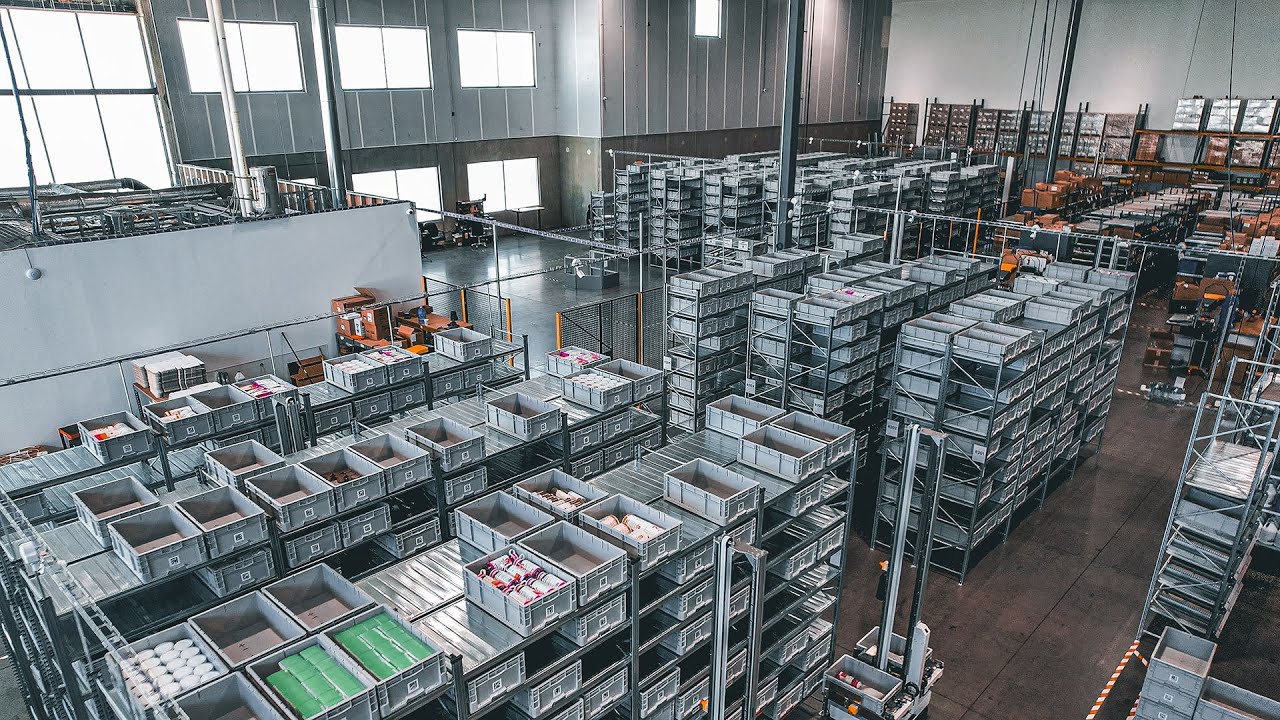
Knuspr Germany Micro Fulfillment Center
A leading German e-grocer automated post-pick order buffering, staging, consolidation, and dispatch using Brightpick Dispatcher robots in its micro-fulfillment center to drive down costs and enable 3-hour delivery.
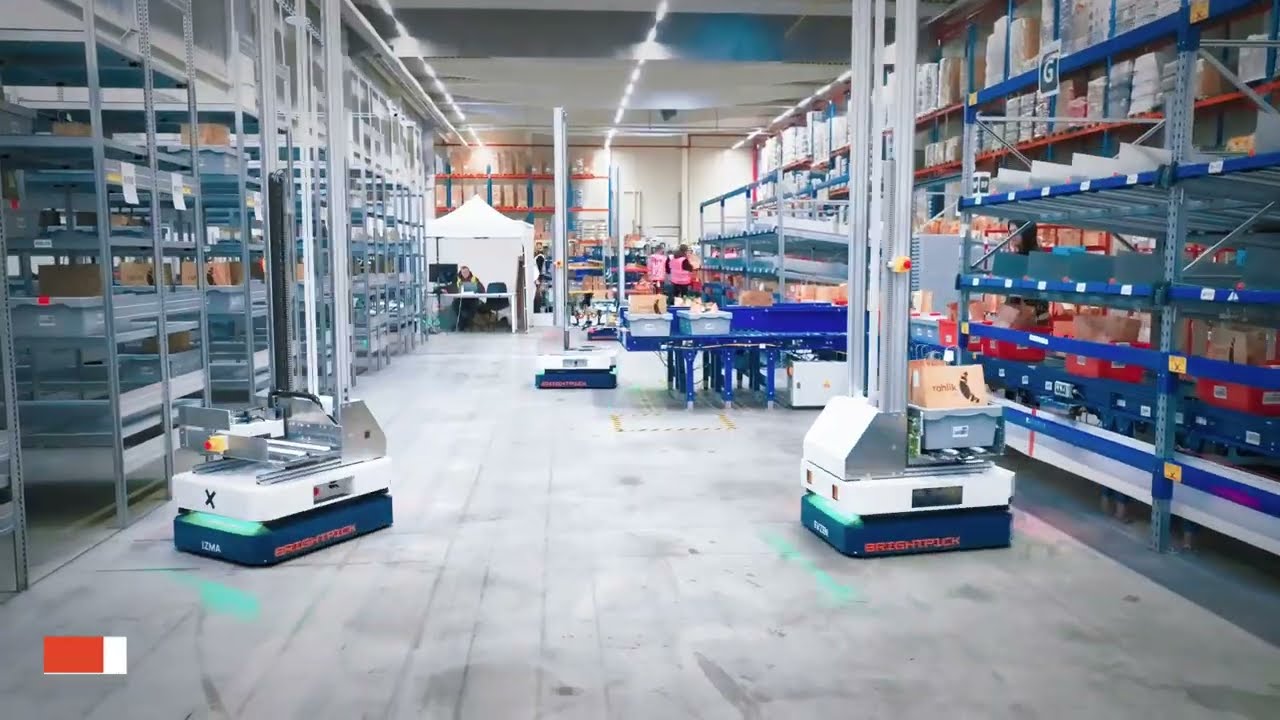
Netrush Kentucky E-commerce Fulfillment Warehouse
A US 3PL automated order picking and replenishment with Brightpick Retriever robots, a Goods-to-Person solution, to handle 20,000 daily orders with peaks 4-5x higher.
Rohlik.cz Prague Fulfillment Center
Rohlik Group automated its Prague e-grocery fulfillment center with Brightpick Dispatcher robots for intelligent order consolidation and dispatch, smoothing daily picking volumes.
Vendor
BrightpickRelated Technologies
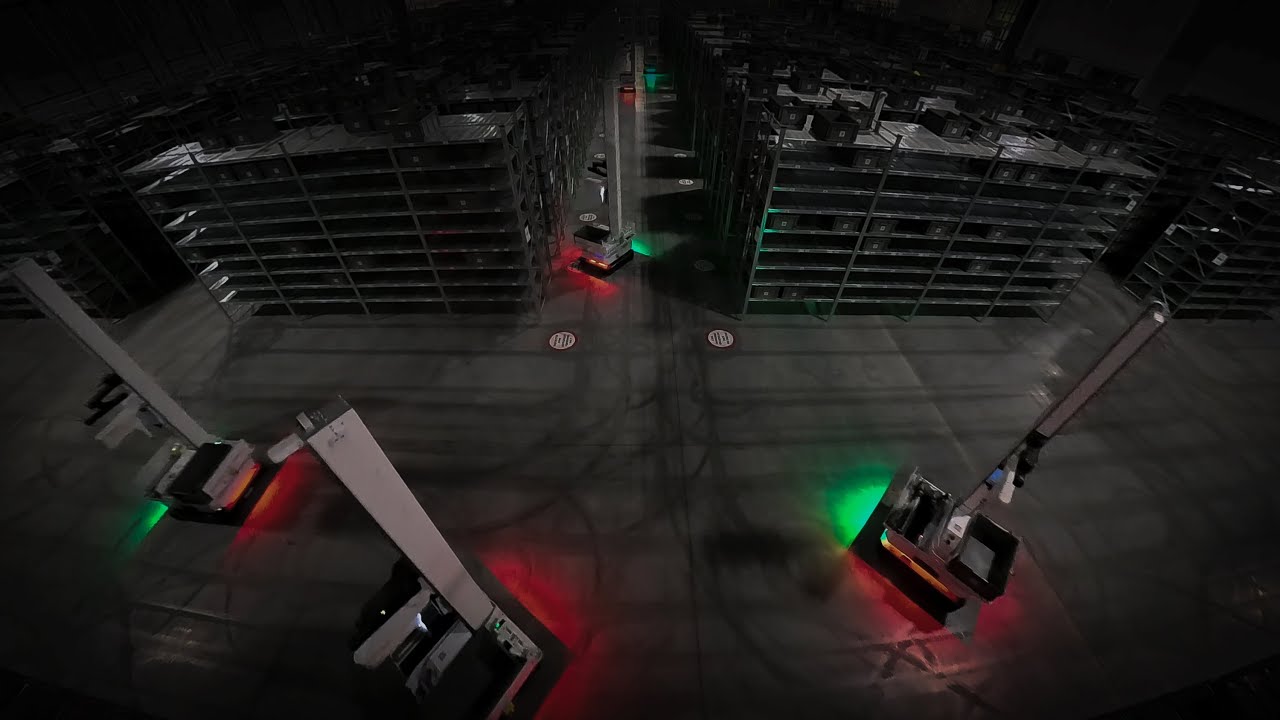
Brightpick Autopicker Lights-Out Warehouse: Fully Automated Night Shifts with Zero Incremental Labor Cost
Brightpick
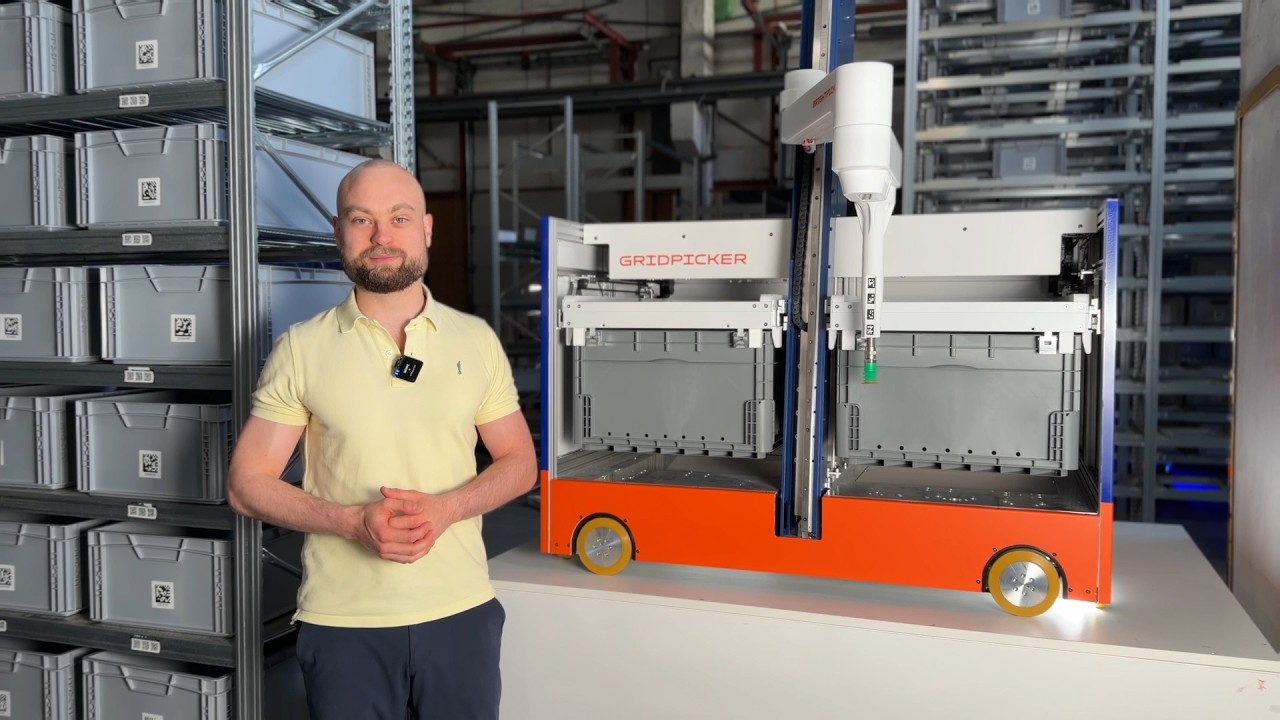
Brightpick Gridpicker: The Fastest and Highest-Throughput AI Warehouse Robot Ever Developed
Brightpick
Autopicker: AI-Powered Mobile Picking Robot
Brightpick