From Operational Bottlenecks to Growth Freedom: LT Apparel's Warehouse Transformation with T-sort
⭐Key Features
- •T-sort by Libiao Robotics — automated sorting solution replacing manual pick-and-pack workflows
- •KPI's Opto AS warehouse execution software coordinating sort logic and order routing
- •3x labor productivity improvement achieved within one year of deployment
- •80% chargeback reduction — dramatic improvement in order accuracy and compliance
- •Workforce restructured from 600+ to under 200 — automation absorbs long-distance walking and heavy lifting
- •Peak season capacity of 150,000+ daily units — exceeding the 125,000+ threshold previously deemed impossible
- •30+ years of manual operations replaced with scalable automated infrastructure
- •Business growth enabled without proportional headcount scaling
Results & Benefits
- 3x increase in units processed per labor hour within 1 year of deployment
- 80% reduction in pick-and-pack chargebacks compared to 2 years prior
- Workforce reduced from 600+ to under 200 staff
- Peak season throughput of 150,000+ daily units — previously unachievable manually
- Long-distance walking and heavy lifting tasks fully absorbed by automation
- Operational bottlenecks eliminated — business growth no longer constrained by warehouse capacity
Challenges & Solutions
For over 30 years, LT Apparel operated its warehouse with manual labor. As the business grew, the manual operation struggled to scale proportionally — peak season demand of 125,000+ daily units pushed the workforce to its limits and frequently resulted in capacity shortfalls, missed shipments, and the operational stress of recruiting and managing large seasonal labor pools. The fundamental constraint was that manual throughput capacity is linearly tied to headcount, and headcount cannot be scaled fast enough or cheaply enough to match demand peaks in the apparel distribution calendar
Libiao's T-sort automated sorting system replaces the manual sorting and pick-and-pack workflows that were the primary throughput bottleneck, providing consistent, scalable capacity that is not constrained by headcount. The system's throughput scales with configuration rather than labor, enabling LT Apparel to meet 150,000+ daily units at peak without the staffing challenges of a 600+ person manual operation
Pick-and-pack chargebacks — financial penalties imposed by retail customers when shipments fail to meet compliance requirements for labeling, packing, sorting, or documentation — are a significant cost and operational risk in apparel wholesale distribution. Manual pick-and-pack operations are inherently error-prone: workers under peak season pressure make mistakes in item selection, quantity counting, label placement, and packing configuration that result in chargeback claims. Over time, a high chargeback rate erodes margins and damages retailer relationships
The T-sort system's automated, system-directed sorting process replaces the manual identification and selection steps where pick-and-pack errors most commonly occur. KPI's Opto AS warehouse execution software provides the order routing and validation logic that ensures each unit is sorted to the correct destination with the correct documentation, reducing the human error sources that drive chargebacks. The 80% chargeback reduction achieved within two years validates the accuracy improvement delivered by the automated system
A 600+ person manual warehouse workforce presents significant operational management complexity: recruitment, training, scheduling, supervision, labor relations, and the physical health and safety risks associated with tasks like long-distance walking across large warehouse floors and heavy lifting of apparel cartons. These management burdens scale with headcount and consume management bandwidth that could be directed toward business growth and customer service
By automating the long-distance walking and heavy lifting tasks that constitute the bulk of manual warehouse labor, the T-sort system enables LT Apparel to operate with under 200 staff — a reduction of more than 400 positions. The remaining workforce is focused on higher-value activities that require human judgment, while the repetitive physical tasks are handled by the robot fleet. This restructuring reduces management complexity, improves working conditions for remaining staff, and lowers the operational risk associated with large-scale seasonal labor management
Project Overview
Project Overview
LT Apparel Group, a US-based apparel distributor with over 30 years of operational history, has transformed its warehouse from a manual operation constrained by labor capacity into an automated fulfillment platform capable of scaling with business growth. The transformation was delivered through the integration of Libiao Robotics' T-sort automated sorting system and KPI Solutions' Opto AS warehouse execution software — a technology partnership that addressed the three most significant operational pain points LT Apparel had accumulated over three decades of manual operations: throughput capacity, order accuracy, and workforce scale.
Published in August 2025, this case study is one of the most quantitatively detailed in the Libiao Robotics portfolio. The published metrics are explicit and compelling: a 3x increase in units processed per labor hour within one year, an 80% reduction in pick-and-pack chargebacks versus two years prior, a workforce reduction from over 600 to under 200 staff, and peak season capacity expanded to 150,000+ daily units — a threshold that previously "felt impossible" to meet manually. Together, these outcomes represent a fundamental restructuring of LT Apparel's operational model, from a labor-intensive manual warehouse to a technology-driven fulfillment operation.
The case study's framing — "from operational bottlenecks to growth freedom" — captures the strategic significance of the transformation. The pre-automation operation was not merely inefficient; it was a growth constraint. Manual warehouse capacity could not scale fast enough or cheaply enough to match LT Apparel's business growth trajectory, creating a structural ceiling on the company's revenue potential. Automation removes that ceiling.
Technical Solution
T-sort by Libiao Robotics
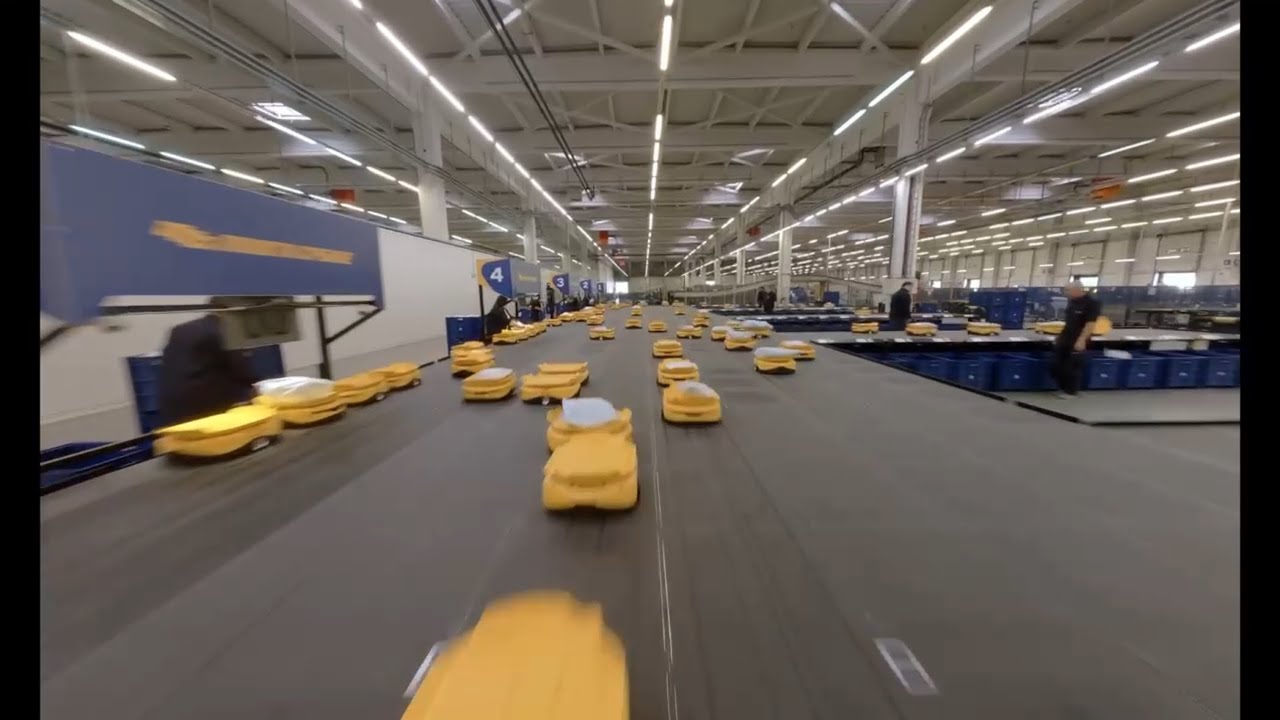
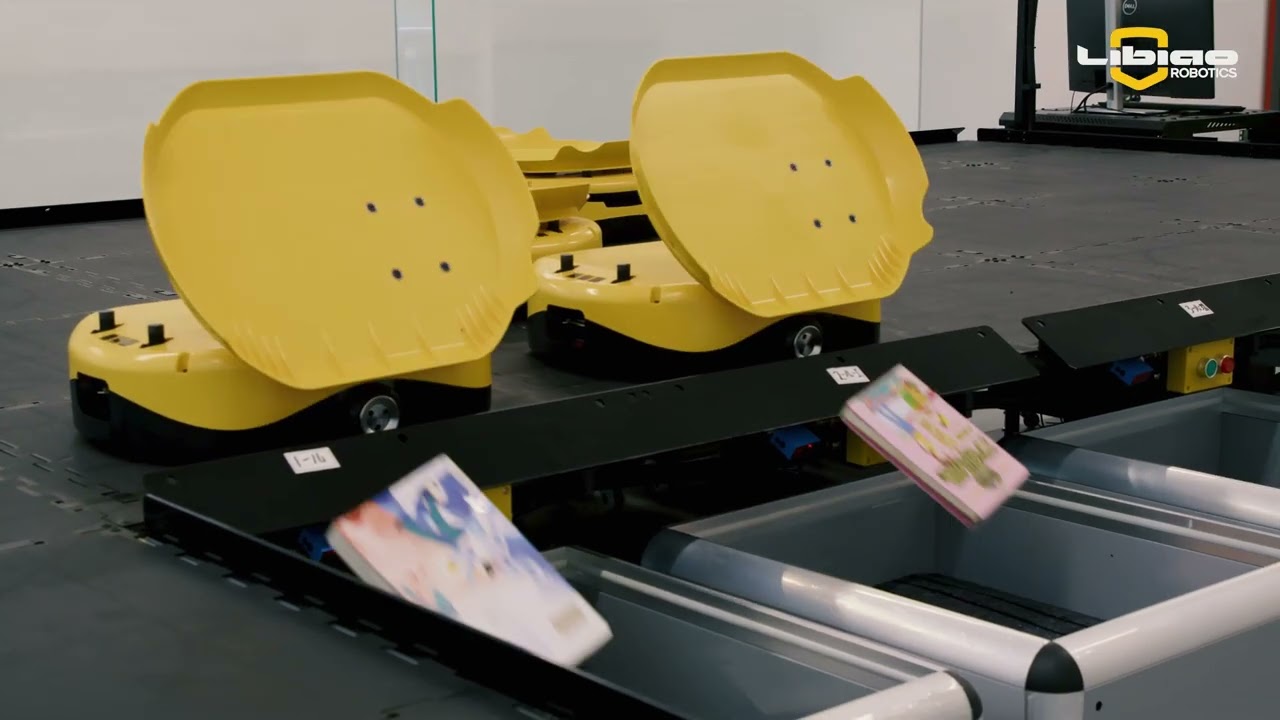
T-sort is Libiao Robotics' AGV-based sorting system, designed for high-throughput unit-level sorting in apparel distribution and fulfillment environments. The system deploys a fleet of Libiao's yellow sorting robots on a flat sorting grid, with each robot carrying a single unit (or small batch) and navigating to its assigned sort destination. The T-sort platform is specifically designed for the apparel distribution context, where the combination of diverse item profiles, unit-level sorting requirements, and high throughput demands requires a flexible, scalable automation solution.
In the LT Apparel deployment, T-sort replaces the manual pick-and-pack workflows that were the primary source of both throughput constraints and accuracy failures. The system receives units from inbound processing, assigns each unit to its sort destination based on order routing logic provided by KPI's Opto AS software, and executes the sort through the AGV fleet. The result is a consistent, system-directed sorting process that operates at machine speed and accuracy rather than human speed and error rates.
Brightpick Autopicker Lights-Out Warehouse: Fully Automated Night Shifts with Zero Incremental Labor Cost
Vendor: Brightpick
Key Features
3x Labor Productivity — Within One Year The speed of the productivity improvement is as significant as the magnitude. Achieving a 3x increase in units processed per labor hour within one year of deployment demonstrates both the effectiveness of the T-sort system and the efficiency of the implementation. For LT Apparel, this productivity gain means that the same business volume can be handled with a fraction of the previous workforce, or that business volume can grow significantly without proportional labor cost increases.
80% Chargeback Reduction The chargeback reduction is the most commercially impactful metric in this case study. Chargebacks represent direct margin erosion — money that LT Apparel earned through sales but lost to compliance failures. An 80% reduction in chargebacks versus two years prior translates directly to improved profitability, stronger retailer relationships, and reduced operational management burden associated with chargeback dispute resolution. This outcome validates the accuracy improvement delivered by the automated, system-directed sorting process.
Workforce Transformation: 600+ to Under 200 The scale of the workforce reduction — from over 600 to under 200 — is one of the most striking metrics in the Libiao Robotics case study portfolio. It reflects the labor intensity of LT Apparel's previous manual operation and the degree to which T-sort has automated the core physical workflows. The remaining workforce operates in a fundamentally different environment: smaller, more skilled, and focused on activities where human capability adds value rather than simply providing physical labor.
Peak Season Capacity: 150,000+ Daily Units The peak season capacity achievement directly addresses the constraint that motivated the automation investment. The 125,000+ daily unit threshold that "felt impossible" to meet manually is now exceeded by the automated system, which handles 150,000+ daily units during peak periods. This capacity headroom provides LT Apparel with confidence to grow its business without fear that warehouse capacity will become a constraint again.
30+ Years of Manual Operations Replaced The 30-year timeline of manual operations is a reminder that automation adoption is not always driven by new business models or new technology — sometimes it is driven by the accumulated operational pain of a model that has worked adequately for decades but can no longer scale. LT Apparel's case demonstrates that even long-established manual operations can be transformed, and that the transformation delivers benefits that compound over time.
Results & Benefits
The quantitative results of this deployment are among the most clearly documented in the Libiao Robotics portfolio:
| Metric | Before | After | |---|---|---| | Units per labor hour | Baseline | 3x improvement | | Pick-and-pack chargebacks | Baseline | 80% reduction | | Peak season daily capacity | ~125,000 (struggled) | 150,000+ (comfortable) | | Warehouse workforce | 600+ | Under 200 |
Beyond the quantitative metrics, the strategic benefit of the transformation is the removal of warehouse capacity as a growth constraint. LT Apparel can now pursue business growth with confidence that the warehouse operation can scale to support it — a qualitative benefit that is difficult to quantify but represents the most significant long-term value of the automation investment.
Challenges & Solutions
The central challenge of this deployment is the transformation of a 30-year-old manual operation — with all the embedded processes, workforce culture, and operational habits that entails — into an automated fulfillment platform. This is not merely a technology implementation challenge; it is an organizational change management challenge that requires alignment between operational leadership, the workforce, and the technology partners.
The phased nature of the results — the 3x productivity improvement achieved "within one year" and the 80% chargeback reduction measured "compared to two years ago" — suggests that the transformation was not instantaneous. The metrics reflect a period of system stabilization, workforce adjustment, and process refinement following the initial deployment. This timeline is consistent with the experience of other large-scale warehouse automation transformations, where the full benefit of the system is realized over months rather than immediately upon go-live.
The partnership between Libiao Robotics (hardware and sorting system) and KPI Solutions (warehouse execution software) is a critical element of the solution architecture. The T-sort hardware provides the physical sorting capability, but the accuracy and compliance improvements that drive the chargeback reduction are delivered by the Opto AS software layer. This hardware-software integration model is a recurring pattern in successful warehouse automation deployments, where the technology platform's full value is realized only when the physical automation is coordinated by intelligent execution software.
Related Technologies (6)
The Frozen Revolution: How Mini Yellow Robots Are Reshaping Cold Storage Logistics
byLibiao Robotics
Brightpick Autopicker Lights-Out Warehouse: Fully Automated Night Shifts with Zero Incremental Labor Cost
byBrightpick
FoxBot Mk3: Third-Generation Autonomous Trailer Loader/Unloader
byFox Robotics
Fox Robotics FoxBot ATL Mark 3: Next-Generation Autonomous Trailer Loader/Unloader with Bidirectional Dock Automation
byFox Robotics
3D Sorting System for World-Renowned Footwear & Apparel Brand — Libiao Robotics
byUnknown
Autonomous Trailer Unloading Forklift: Technology Guide
byOthers
Related Knowledge Articles (2)
Multi-Robot Orchestration
Intelligent fleet management systems that coordinate multiple autonomous robots to work together efficiently, optimizing task allocation, traffic management, and resource utilization across complex warehouse environments.
Pouch/Pocket Sorter
Pouch Sorters use suspended fabric pouches or pockets traveling on an overhead track to sort individual items with exceptional gentleness and flexibility. Ideal for fashion, apparel, and omnichannel retail operations, these systems excel at handling soft goods, hanging garments, and irregularly shaped items while providing dynamic buffering and sequencing capabilities.
Related Projects

AirRob System: Boosting Deployment Efficiency and Multi-Category Sorting in Japan — Second Deployment
Libiao Robotics
Serbian Post's First Robotic Sorting System by Libiao | 3D AI-Powered Automation
Libiao Robotics
Automated Book Return & Sorting System at Sanya Library — Libiao Robotics
Libiao Robotics
More from Libiao Robotics
AirRob System: Boosting Deployment Efficiency and Multi-Category Sorting in Japan — Second Deployment
Serbian Post's First Robotic Sorting System by Libiao | 3D AI-Powered Automation