Boot Barn – Scaling Nationwide Retail Distribution with HaiPick ASRS
⭐Key Features
- •34-foot high lights-out automated storage doubles density compared to Boot Barn's previous facility
- •460 totes per hour throughput with 100% picking accuracy
- •50% reduction in labor requirements
- •250% efficiency improvement over previous wire-guided order picking operation
- •Flexible and scalable architecture supporting three facility expansions within one year
- •450,000 sq ft greenfield distribution center in Kansas City
- •HaiPick ASRS deployed in partnership with IndPro and SSI SCHÄFER
Results & Benefits
- Doubled storage density versus Boot Barn's previous facility
- 460 totes per hour throughput
- 100% order picking accuracy
- 50% reduction in labor requirements
- 250% efficiency increase over wire-guided order picking
- Three successful facility expansions supported within a single year
Challenges & Solutions
Boot Barn is the largest Western wear retailer in the US and has been expanding its store footprint at a rapid pace, creating distribution pressure that the previous facility and picking methodology could not sustain at the required throughput and accuracy levels
A new 450,000 sq ft Kansas City distribution center was built around the HaiPick ASRS, with 34-foot high lights-out automated storage delivering double the storage density of the previous facility and a goods-to-person picking workflow achieving 460 totes per hour at 100% accuracy
Wire-guided order picking — the legacy method at Boot Barn's previous facility — is labor-intensive, error-prone at scale, and inherently difficult to expand without proportional increases in headcount and floor space
The HaiPick ASRS replaced wire-guided picking entirely, delivering a 250% efficiency improvement and reducing labor requirements by 50% through automated goods-to-person workflows that scale with robot fleet capacity rather than headcount
Rapid retail growth requires a distribution infrastructure that can expand quickly without operational disruption — Boot Barn needed a system capable of scaling alongside a store network that was growing faster than traditional DC configurations could accommodate
The HaiPick System's modular and scalable architecture enabled three separate facility expansions within a single year of deployment, demonstrating the system's ability to grow incrementally in step with Boot Barn's retail expansion trajectory
Project Overview
Project Overview
Boot Barn is the largest retailer of Western and work-related lifestyle apparel and footwear in the United States, operating hundreds of stores across the country and continuing to expand its physical retail footprint at a significant pace. As store count grows, so does the volume and complexity of distribution operations — the central distribution network must deliver a wider range of SKUs to more locations, faster, and with greater accuracy, all without a proportional increase in operating costs.
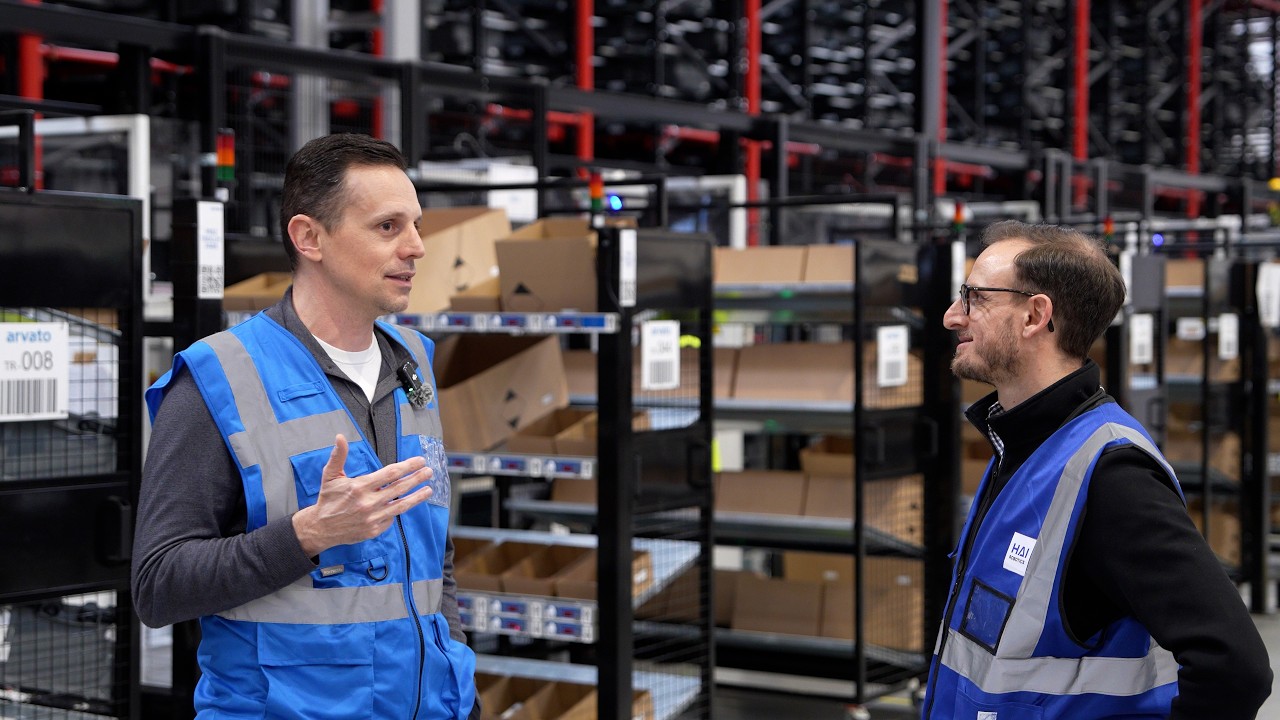
To meet this challenge, Boot Barn partnered with Industrial Procurement Services (IndPro) and SSI SCHÄFER to design and build a new 450,000-square-foot distribution center in Kansas City. At the heart of the facility is the HaiPick Automated Storage and Retrieval System (ASRS), supplied by Hai Robotics. The project, documented in March 2026, represents a fundamental step change from Boot Barn's previous distribution model — replacing wire-guided order picking with a fully automated goods-to-person system that doubles storage density, cuts labor by half, and delivers throughput and accuracy levels that the legacy operation could not approach.
The scale of the outcome is reinforced by a detail that speaks directly to the system's practical value: Boot Barn has already executed three separate expansions of the facility within a single year of the system going live, demonstrating that the automation infrastructure is not just performing at specification but actively enabling the company's growth strategy.
Technical Solution
HaiPick ASRS — Lights-Out High-Density Automated Storage
The storage system at the Kansas City facility is built around HaiPick ASRS, Hai Robotics' Autonomous Case-handling Robot (ACR) platform. The defining physical characteristic of this deployment is the 34-foot high lights-out storage configuration — racking that reaches 34 feet in height and operates without any human presence in the storage zone. The ACR robots navigate autonomously within the storage grid, retrieving totes and cases from any location within the full 34-foot vertical envelope and delivering them to operator workstations positioned at the perimeter of the storage area.
The "lights-out" designation reflects the fact that no human access to the storage zone is required during normal operations. This has two significant implications. First, it eliminates the safety constraints that limit rack height in manually-operated environments — humans cannot safely work at 34 feet without specialized equipment, but robots operate at that height as a matter of routine. Second, it removes the aisle space requirements that conventional warehouse layouts allocate for human and forklift access, allowing the storage grid to be configured at a density that is simply not achievable in a human-accessible warehouse layout. The combined effect of these two factors is the doubling of storage density relative to Boot Barn's previous facility.
HaiPick Climb (Upgraded): High-Density Storage with Rack-Climbing ACR Technology
Vendor: Hai Robotics
Key Features
Doubled Storage Density The 34-foot high lights-out storage configuration delivers double the storage density of Boot Barn's previous facility. This is achieved through the combination of full vertical space utilization — enabled by robot-driven retrieval that is unconstrained by human ergonomic limits — and the elimination of human-access aisles within the storage grid. For a retailer managing a broad SKU range across Western wear, workwear, and footwear categories, this density improvement directly translates to greater inventory breadth and depth within a fixed building footprint.
460 Totes Per Hour at 100% Accuracy The throughput and accuracy metrics of this deployment are among the strongest in the documented Hai Robotics case study portfolio. 460 totes per hour is a substantial throughput figure for a retail distribution operation, and 100% picking accuracy — rather than the 99%+ figure cited in most comparable deployments — sets a particularly high standard. The combination of these two metrics validates the goods-to-person model's ability to sustain both speed and precision simultaneously, which is a common point of concern when evaluating high-throughput automation.
50% Labor Reduction The 50% reduction in labor requirements reflects the shift from manual aisle-based picking to automated goods-to-person workflows. In the context of a 450,000-square-foot distribution center, this labor saving represents a substantial and recurring operational cost reduction. It also reduces Boot Barn's exposure to labor market volatility — a particularly relevant consideration for a distribution operation that must scale rapidly alongside retail expansion.
250% Efficiency Improvement Over Wire-Guided Picking The 250% efficiency gain is benchmarked specifically against Boot Barn's previous wire-guided order picking operation, providing a direct before-and-after comparison rather than a generic industry benchmark. Wire-guided picking — where operators follow a predetermined path through the warehouse guided by floor-mounted wires or tape — is a relatively mature and labor-intensive methodology. The magnitude of the efficiency improvement reflects how significant the gap is between that legacy approach and a modern goods-to-person ASRS.
Three Expansions in One Year The facility has undergone three separate expansions within a single year of the HaiPick system going live. This track record demonstrates that the system's scalability is not a theoretical feature of the architecture but a practically validated capability in a live, high-growth deployment. For any retailer evaluating warehouse automation, the ability to expand capacity incrementally without operational disruption is a critical consideration — and Boot Barn's experience provides concrete evidence that HaiPick ASRS delivers on this capability.
Results & Benefits
The Boot Barn deployment delivers a compelling combination of density, throughput, accuracy, and labor efficiency that positions the Kansas City facility as a distribution asset capable of supporting the company's continued retail expansion. The doubling of storage density within a new 450,000 sq ft facility means that the building's effective storage capacity far exceeds what a conventional shelving and picking layout would have achieved in the same footprint. The 460 totes per hour throughput at 100% accuracy ensures that store replenishment cycles can be maintained at the speed and reliability that a rapidly growing retail network demands.
The labor efficiency story is equally important from an operational economics perspective. A 50% reduction in labor requirements in a large distribution center represents a significant ongoing cost saving that compounds over the system's operational lifetime. Combined with the 250% efficiency improvement over the legacy wire-guided picking model, the total labor productivity transformation is substantial — the same distribution output is achieved with half the workforce, each of whom is operating at 3.5 times the efficiency of the previous methodology.
The three-expansion milestone is the result that most directly validates the strategic rationale for the investment. Boot Barn did not simply automate its existing operation — it built a distribution platform designed to grow, and the platform has demonstrably delivered on that design intent within its first year of operation.
Challenges & Solutions
The central challenge of the Boot Barn project is the tension between rapid retail growth and the inherent capacity constraints of traditional distribution infrastructure. Wire-guided order picking scales linearly with headcount and floor space — to double throughput, you roughly double the workforce and the warehouse. This model becomes increasingly uneconomical as store count grows and as labor markets tighten. The HaiPick ASRS breaks this linear relationship by scaling throughput through robot fleet additions rather than headcount additions, and by maximizing the productive use of the existing building envelope through vertical storage density.
The facility design challenge — building a 450,000 sq ft distribution center from the ground up around an automated storage system — required close coordination between Boot Barn, IndPro as the procurement and project management partner, SSI SCHÄFER as the materials handling systems integrator, and Hai Robotics as the ASRS technology provider. The successful outcome, including the three subsequent expansions, reflects the effectiveness of this multi-partner project delivery model.
Related Technologies (6)
HaiPick Climb (Upgraded): High-Density Storage with Rack-Climbing ACR Technology
byHai Robotics
Momentum WES: Next-Generation Warehouse Execution and Control
byHoneywell Intelligrated
Goods-to-Person ACR Solution for Warehouse Modernization
byHai Robotics
MIX: All-round Goods-to-Person Picking Solution
byMushiny
Autopicker: Multi-Purpose AI-Powered Picking AMR
byBrightpick
HaiPick Climb System: Goods-to-Person Warehouse Automation
by Hai Robotics
Related Knowledge Articles (2)
Goods-to-Person Systems
Goods-to-Person (G2P) systems revolutionize warehouse operations by bringing inventory directly to stationary picking stations, eliminating worker travel time and maximizing productivity. These automated systems combine storage, retrieval, and presentation technologies to create highly efficient picking environments.
AMR Goods-to-Person
AMR goods-to-person systems use autonomous mobile robots to transport inventory from storage locations to picking stations, eliminating worker travel time and dramatically improving order fulfillment efficiency.
Related Projects
More from Hai Robotics
St. Luke's Transforms Healthcare Fulfillment from the Ground Up
Li-Ning – Fulfillment Center Transformation in 1 Month with HaiPick Climb