Li-Ning – Fulfillment Center Transformation in 1 Month with HaiPick Climb
⭐Key Features
- •1-month implementation timeline from installation to full go-live
- •3× storage capacity increase within existing fulfillment center footprint
- •96% vertical space utilization — near-maximum use of available ceiling height
- •800+ pieces outbound per hour throughput
- •99%+ order picking accuracy
- •Seamless handling of both footwear and apparel in a single unified automated system
- •HaiPick Climb rack-climbing ACR technology — no dedicated robot aisles required
- •Space-efficient operation without facility expansion or relocation
Results & Benefits
- 1-month deployment: installation to go-live
- 3× increase in storage capacity
- 96% vertical space utilization
- 800+ pieces outbound per hour
- 99%+ order picking accuracy
- Unified handling of footwear and apparel within one automated system
- Faster, smarter, more space-efficient fulfillment operation
Challenges & Solutions
Li-Ning's fulfillment operation handles two structurally different product categories — footwear (rigid, boxed, heavier) and apparel (folded, flexible, lighter) — each with different storage and handling requirements. Managing both categories efficiently within a single warehouse operation is a common pain point for multi-category sportswear brands
HaiPick Climb's flexible ACR goods-to-person system handles both footwear and apparel within a unified storage grid and picking workflow, with the warehouse execution software managing storage location assignments and retrieval sequencing across both product types without requiring physical separation of the categories
Sportswear fulfillment centers face significant space pressure as SKU counts and order volumes grow, particularly for brands like Li-Ning that operate across both retail replenishment and direct-to-consumer e-commerce channels. Expanding the physical facility footprint is capital-intensive and operationally disruptive
HaiPick Climb's rack-climbing design achieves 96% vertical space utilization — effectively eliminating the ceiling height underutilization that characterizes conventional shelving — and removes the need for robot travel aisles within the storage zone, tripling storage capacity within the existing building footprint
Traditional warehouse automation projects typically require 6–12 months or more from project initiation to operational go-live, creating an extended period of disruption and deferred ROI that many operations cannot accommodate
HaiPick Climb's low-complexity deployment model delivered full operational go-live within 1 month of installation commencement — a deployment timeline that is exceptionally fast for a goods-to-person ASRS and reflects the system's retrofittable, modular architecture
Project Overview
Project Overview
Li-Ning is one of China's most prominent global sportswear brands, operating across retail, e-commerce, and wholesale channels with a broad product range spanning footwear, apparel, and accessories. As a brand that competes directly with international sportswear giants in both domestic and export markets, Li-Ning's fulfillment operations must deliver the speed, accuracy, and scalability that modern sportswear retail demands — while managing the particular complexity of handling two structurally different product categories, footwear and apparel, within the same warehouse environment.
The deployment of HaiPick Climb at Li-Ning's fulfillment center, published in November 2025, represents one of the fastest documented go-live timelines in the Hai Robotics case study portfolio: one month from installation to full operational status. The results are equally strong — a 3× storage capacity increase, 96% vertical space utilization, 800+ pieces outbound per hour, and 99%+ picking accuracy — delivered across a unified system that handles both footwear and apparel without categorical separation.
Technical Solution
HaiPick Climb for Mixed-Category Sportswear Fulfillment
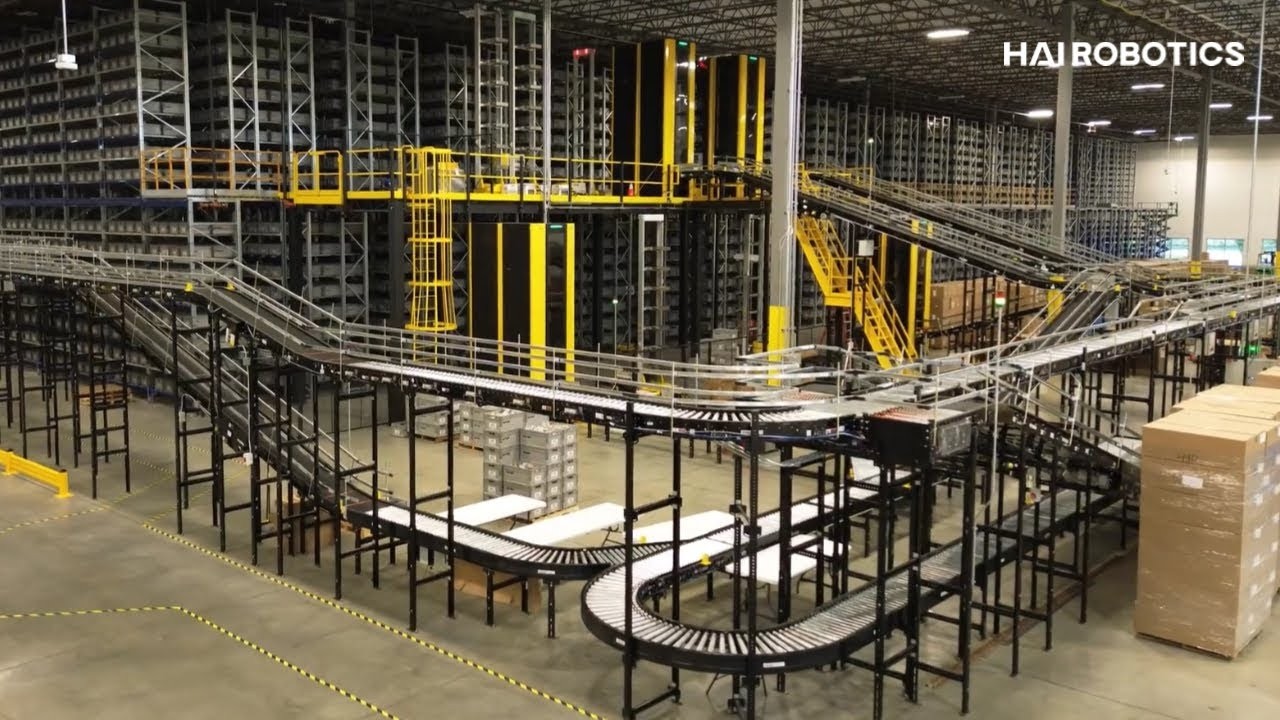
The HaiPick Climb system, powered by the HaiClimber rack-climbing ACR robot, is the core technology deployed at the Li-Ning fulfillment center. The HaiClimber physically climbs the racking structure to retrieve totes and cases from storage positions at any height, delivering them to operator workstations positioned at the base of the storage grid. This climbing mechanism eliminates the dedicated robot travel aisles that floor-based ACR systems require, enabling the storage grid to be configured at a density that is structurally impossible in conventional warehouse layouts.
For Li-Ning's specific operational context, the system's most distinctive capability is its unified handling of both footwear and apparel. These two categories present different physical storage characteristics: footwear typically arrives in rigid branded shoeboxes with fixed dimensions and moderate weight, while apparel is folded, flexible, and variable in both form factor and weight. In manual warehouse operations, these differences often drive physical separation of storage zones, with different shelving configurations, picking methodologies, and staffing allocations for each category. HaiPick Climb's tote-based storage model abstracts away these physical differences — both footwear (in boxes) and apparel (folded into totes) are stored and retrieved through the same automated system, with the warehouse execution software managing the picking workflow at the workstation level regardless of category.
HaiPick Climb (Upgraded): High-Density Storage with Rack-Climbing ACR Technology
Vendor: Hai Robotics
Key Features
1-Month Installation to Go-Live The deployment timeline is the most commercially differentiated outcome of this case study. For a brand operating in a competitive sportswear market where fulfillment speed is a direct consumer-facing metric, the ability to transform the warehouse operation in four weeks rather than six to twelve months is a strategic advantage. It minimizes the period of operational disruption, accelerates the realization of ROI, and reduces the project management overhead associated with extended installation programs.
3× Storage Capacity at 96% Vertical Utilization Tripling storage capacity within an existing building footprint through 96% vertical space utilization is the headline density achievement of this deployment. For Li-Ning's fulfillment center, this means the facility can now hold three times the inventory it previously managed in the same building — supporting a broader SKU range, higher safety stock levels, and greater resilience to supply chain variability without the capital cost of a facility expansion or relocation.
800+ Pieces Outbound Per Hour The throughput of 800+ pieces per hour is a system-level outbound fulfillment metric that encompasses both footwear and apparel categories. This figure validates the system's ability to sustain high throughput across a mixed-category inventory profile, where the physical handling characteristics of the two product types differ significantly. The goods-to-person model sustains this throughput by keeping operators stationary at workstations and using the robot fleet to manage all storage and retrieval movements.
99%+ Order Picking Accuracy The 99%+ accuracy standard is consistent with results documented across other HaiPick Climb deployments in the sportswear sector (notably the Anta deployment, which achieved the same accuracy benchmark). System-directed picking at the workstation — where the operator receives explicit instructions for each pick rather than locating and identifying items independently — is the primary mechanism through which this accuracy level is sustained across both footwear and apparel order lines.
Unified Footwear and Apparel Handling The explicit documentation of unified handling for both footwear and apparel within a single system is a meaningful operational detail for sportswear brands evaluating warehouse automation. Many competing solutions require category-specific storage configurations or separate picking zones for boxed footwear versus folded apparel, adding complexity and reducing inventory flexibility. HaiPick Climb's tote-based unified storage model eliminates this categorical separation, simplifying operations and allowing the full inventory to be managed as a single pool.
Results & Benefits
The Li-Ning deployment delivers a combination of speed, density, throughput, and accuracy that addresses the core operational challenges of a growing global sportswear brand's fulfillment operation. The 3× storage capacity increase within the existing building eliminates the immediate pressure for facility expansion, providing a multi-year runway for inventory growth within the current footprint. The 96% vertical space utilization demonstrates that the system has maximized the productive use of the existing building asset — there is no meaningful additional capacity to be extracted from the facility through conventional means.
The 800+ pieces per hour throughput and 99%+ accuracy combination provides the operational foundation for both retail replenishment and direct-to-consumer e-commerce fulfillment at the service levels that Li-Ning's brand positioning requires. The 1-month deployment timeline means that these benefits were realized within a single month of project commencement — a speed of value delivery that is exceptional in the warehouse automation sector.
The unified handling of footwear and apparel within a single system simplifies the operational model significantly, reducing the management overhead associated with running separate storage zones and picking methodologies for different product categories.
Challenges & Solutions
The central operational challenge of the Li-Ning deployment is the combination of multi-category inventory management and space constraint within a growing sportswear fulfillment operation. Managing footwear and apparel together in a single automated system requires a storage and retrieval architecture that is agnostic to the physical differences between the two categories — HaiPick Climb's tote-based model provides this abstraction, treating both categories as storage units regardless of their physical form.
The space constraint challenge is addressed through the vertical utilization strategy at the core of HaiPick Climb's design. The 96% vertical utilization figure is not incidental — it is the result of a deliberate design choice to eliminate the two primary constraints on vertical storage in conventional warehouses (human ergonomics and forklift access) simultaneously, through robot-driven retrieval and replenishment across the full height of the racking structure.
The deployment speed challenge reflects a broader market need in the sportswear sector, where seasonal inventory cycles and competitive pressure on fulfillment speed mean that operations cannot afford extended automation project timelines. The 1-month go-live demonstrates that HaiPick Climb's deployment model is genuinely compatible with the operational rhythms of a fast-moving consumer goods fulfillment environment.
Related Technologies (6)
HaiPick Climb (Upgraded): High-Density Storage with Rack-Climbing ACR Technology
byHai Robotics
Momentum WES: Next-Generation Warehouse Execution and Control
byHoneywell Intelligrated
Goods-to-Person ACR Solution for Warehouse Modernization
byHai Robotics
Mecalux Shuttle System: Automated AS/RS for Boxes and Small Parts
byMecalux
MIX: All-round Goods-to-Person Picking Solution
byMushiny
Autopicker: Multi-Purpose AI-Powered Picking AMR
byBrightpick
Related Knowledge Articles (3)
Robotic Piece Picking
Advanced robotic systems that use AI and computer vision to automatically select and pick individual items from diverse inventory, revolutionizing warehouse fulfillment operations with human-like dexterity and intelligence.
Goods-to-Person Systems
Goods-to-Person (G2P) systems revolutionize warehouse operations by bringing inventory directly to stationary picking stations, eliminating worker travel time and maximizing productivity. These automated systems combine storage, retrieval, and presentation technologies to create highly efficient picking environments.
AMR Goods-to-Person
AMR goods-to-person systems use autonomous mobile robots to transport inventory from storage locations to picking stations, eliminating worker travel time and dramatically improving order fulfillment efficiency.
Related Projects
More from Hai Robotics
St. Luke's Transforms Healthcare Fulfillment from the Ground Up
European Premium Beauty Retailer – Omnichannel Fulfillment Transformation with HaiPick System 3