St. Luke's Transforms Healthcare Fulfillment from the Ground Up
⭐Key Features
- •End-to-end healthcare fulfillment transformation — 'from the ground up'
- •Improved fulfillment speed for time-sensitive medical supply distribution
- •Enhanced operational control over healthcare inventory and order management
- •Strengthened supply chain reliability for critical healthcare materials
- •Automated goods-to-person system adapted to healthcare compliance requirements
- •Scalable architecture supporting St. Luke's growth and operational evolution
Results & Benefits
- Transformed healthcare fulfillment operations from ground up
- Improved fulfillment speed for clinical and operational supply distribution
- Greater operational control and inventory visibility
- Stronger supply chain reliability for critical healthcare materials
Challenges & Solutions
Healthcare fulfillment operates under uniquely stringent requirements compared to commercial warehouse environments: strict traceability and lot/expiry management for pharmaceuticals and medical devices, zero-tolerance accuracy standards (picking errors in healthcare can have direct patient safety consequences), and regulatory compliance obligations that govern how inventory is stored, handled, and tracked
Hai Robotics' automated goods-to-person system provides system-directed picking that eliminates the manual identification and location steps where errors most commonly occur, while the warehouse execution software supports the traceability and inventory management workflows required in regulated healthcare environments
Healthcare supply chains are characterized by high urgency — clinical departments depend on timely fulfillment of medical supplies for patient care delivery, and delays in internal distribution can have cascading effects on care quality and operational efficiency. Manual fulfillment operations struggle to sustain the consistent speed and prioritization logic required across a complex, multi-department demand profile
The automated goods-to-person model sustains consistent throughput regardless of order volume variability, with the warehouse execution software managing order prioritization across the demand mix to ensure time-sensitive clinical requests are fulfilled with appropriate urgency
Healthcare providers face growing pressure to improve supply chain resilience following the disruptions exposed by the COVID-19 pandemic. Internal fulfillment operations that depend heavily on manual labor are inherently vulnerable to staffing shortages, absenteeism, and labor market volatility — risks that healthcare organizations cannot afford to carry in their supply chains
Automating the core fulfillment workflows reduces the operation's dependence on manual labor for routine storage and retrieval tasks, providing a more resilient operational model that maintains throughput capacity independent of staffing fluctuations
Project Overview
Project Overview
St. Luke's, a prominent healthcare provider, has partnered with Hai Robotics to transform its healthcare fulfillment operations using automated goods-to-person technology. The case study, published in May 2026, is framed around three core performance dimensions: fulfillment speed, operational control, and supply chain reliability — a framing that reflects the specific priorities of healthcare logistics rather than the storage density and throughput metrics that dominate commercial warehouse case studies.
The phrase "from the ground up" in the case study title signals a comprehensive transformation rather than an incremental improvement — St. Luke's has rebuilt its fulfillment model around automation, rather than layering automation onto an existing manual operation. This is a meaningful distinction: it implies that the system design, workflow architecture, and operational model were all reconceived around the capabilities of the Hai Robotics platform, rather than constrained by legacy processes.
This deployment marks Hai Robotics' documented entry into the North American healthcare fulfillment sector, and represents one of the most operationally distinctive case studies in the portfolio — healthcare logistics has requirements, constraints, and performance standards that differ fundamentally from retail, apparel, or electronics fulfillment.
Technical Solution
Hai Robotics ACR System for Healthcare Fulfillment
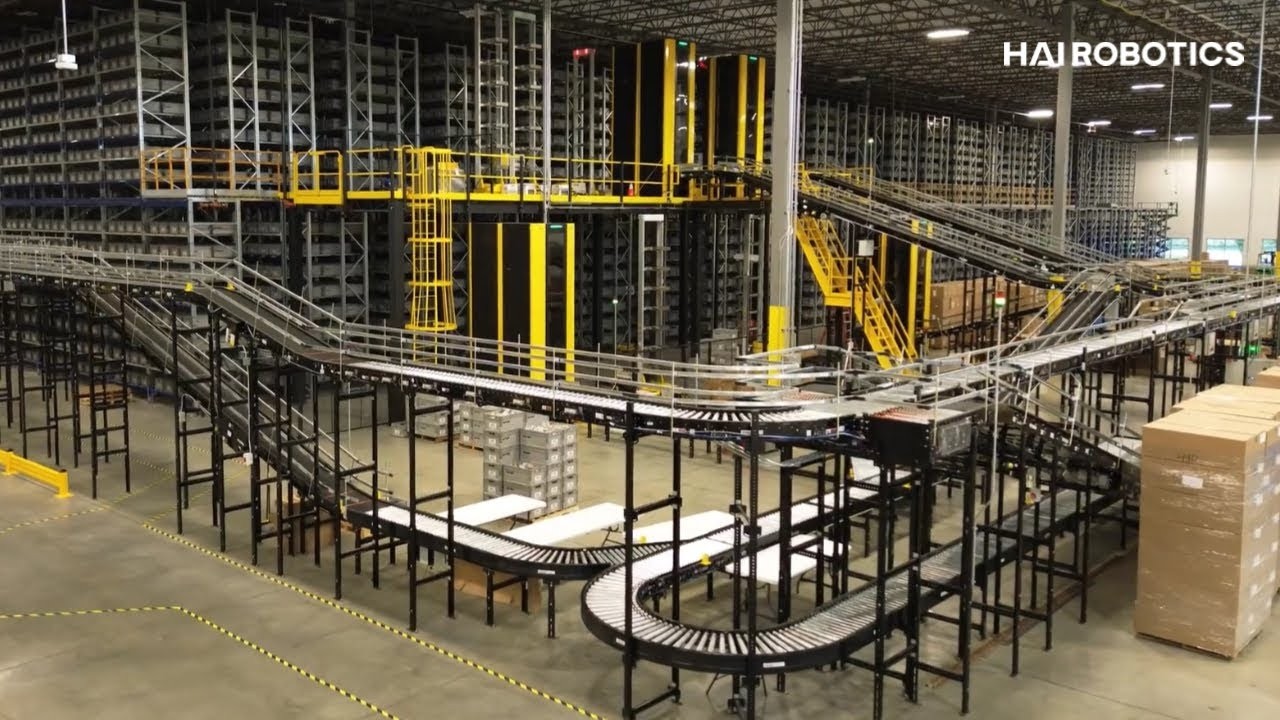
The Hai Robotics automated goods-to-person system deployed at St. Luke's applies the same core ACR technology used across the company's commercial deployments — autonomous robots retrieve totes from a high-density storage grid and deliver them to operator workstations — but the operational configuration and software integration are adapted to the specific requirements of healthcare fulfillment.
The goods-to-person model is particularly well-suited to healthcare because it places the operator at a stationary workstation with system-directed picking instructions, rather than navigating through a warehouse to locate items independently. This system-directed workflow eliminates the manual item identification and location steps that are the primary source of picking errors in manual healthcare fulfillment operations. The operator receives explicit instructions for each pick — what to pick, how many, from which tote — and the system validates each pick before the next instruction is issued.
Momentum WES: Next-Generation Warehouse Execution and Control
Vendor: Honeywell Intelligrated
Key Features
Comprehensive Transformation — "From the Ground Up" The case study's framing as a ground-up transformation indicates that St. Luke's rebuilt its fulfillment model around the automated system rather than retrofitting automation onto existing processes. This approach typically delivers more complete operational benefits than incremental automation, as it allows workflow design, staffing models, and system integration to be optimized for the automated environment from the outset.
Fulfillment Speed for Time-Sensitive Healthcare Supply Healthcare supply distribution includes a spectrum of urgency — from routine scheduled replenishment to urgent clinical requests. The automated goods-to-person model sustains consistent throughput across this urgency spectrum, with the warehouse execution software managing order prioritization to ensure that time-sensitive requests are fulfilled without delay while routine orders are processed efficiently in parallel.
Operational Control and Real-Time Inventory Accuracy The system's real-time transaction recording provides St. Luke's with continuous inventory accuracy — a capability that is both operationally valuable (enabling reliable fulfillment) and compliance-relevant (supporting lot tracking and expiry management requirements). This level of inventory control is difficult to achieve and sustain in manual operations without significant ongoing investment in cycle counting and reconciliation.
Supply Chain Reliability Through Automation Reducing the fulfillment operation's dependence on manual labor for routine storage and retrieval tasks improves resilience against staffing disruptions. This is a strategic benefit that healthcare organizations have come to prioritize as a direct lesson from the operational challenges of the pandemic period.
Related Technologies (6)
HaiPick Climb (Upgraded): High-Density Storage with Rack-Climbing ACR Technology
byHai Robotics
Momentum WES: Next-Generation Warehouse Execution and Control
byHoneywell Intelligrated
Goods-to-Person ACR Solution for Warehouse Modernization
byHai Robotics
HaiPick Climb System: Goods-to-Person Warehouse Automation
by Hai Robotics
MIX: All-round Goods-to-Person Picking Solution
byMushiny
Box-IT: Ergonomic Goods-to-Person Workstation
byAddverb
Related Knowledge Articles (2)
Goods-to-Person Systems
Goods-to-Person (G2P) systems revolutionize warehouse operations by bringing inventory directly to stationary picking stations, eliminating worker travel time and maximizing productivity. These automated systems combine storage, retrieval, and presentation technologies to create highly efficient picking environments.
AMR Goods-to-Person
AMR goods-to-person systems use autonomous mobile robots to transport inventory from storage locations to picking stations, eliminating worker travel time and dramatically improving order fulfillment efficiency.
Related Projects
From Operational Bottlenecks to Growth Freedom: LT Apparel's Warehouse Transformation with T-sort
Libiao Robotics
Li-Ning – Fulfillment Center Transformation in 1 Month with HaiPick Climb
Hai Robotics
European Premium Beauty Retailer – Omnichannel Fulfillment Transformation with HaiPick System 3
Hai Robotics
More from Hai Robotics
Li-Ning – Fulfillment Center Transformation in 1 Month with HaiPick Climb
European Premium Beauty Retailer – Omnichannel Fulfillment Transformation with HaiPick System 3