St. Luke's Consolidated Services Center – Healthcare Fulfillment Automation
⭐Key Features
- •18,600+ storage locations within the fully automated Consolidated Services Center
- •650+ outbound totes per hour throughput capacity
- •Powered by HaiPick System 1 — Hai Robotics' ACR-based goods-to-person automation platform
- •Greenfield build: facility designed and constructed from the ground up as a fully automated operation
- •Improved inventory accuracy and real-time supply chain visibility
- •Ergonomic, safer workflows replacing manual picking and heavy lifting tasks
- •Greater operational control over healthcare distribution and supply chain reliability
Results & Benefits
- 18,600+ storage locations delivered within the new facility
- 650+ outbound totes processed per hour
- Improved fulfillment accuracy and inventory visibility across healthcare distribution operations
- Safer, more ergonomic working environment for warehouse staff
- Enhanced supply chain resilience and operational control for St. Luke's healthcare network
Challenges & Solutions
Healthcare providers require extremely high fulfillment accuracy and supply chain reliability — errors in medical supply distribution can have direct patient care consequences
Implemented HaiPick System 1 with automated goods-to-person workflows, improving accuracy and providing real-time inventory visibility across the Consolidated Services Center
Building a scalable, future-ready fulfillment operation capable of supporting a growing healthcare network from day one
Greenfield facility designed from the ground up in partnership with Hai Robotics and Equipment Depot, allowing the automation architecture to be embedded into the building design rather than retrofitted
Manual healthcare fulfillment operations involve repetitive heavy lifting and ergonomic risks for warehouse workers
Goods-to-person automation via HaiPick System 1 brings items to operators at ergonomic workstations, eliminating the need for staff to travel through aisles or lift heavy totes manually
Project Overview
Project Overview
St. Luke's, a healthcare organization requiring reliable and accurate distribution of medical supplies across its network, undertook a transformational project to modernize its supply chain operations from the ground up. Rather than retrofitting an existing facility, St. Luke's chose to build a brand-new, purpose-built Consolidated Services Center (CSC) — a centralized hub designed to manage the procurement, storage, and distribution of healthcare supplies to its network of hospitals and care facilities.
The project was driven by a need to improve fulfillment speed, operational control, inventory accuracy, and supply chain resilience. Healthcare fulfillment carries uniquely high stakes: delays or errors in medical supply distribution can directly affect patient care. St. Luke's recognized that a modern, automated approach was necessary to meet these demands at scale, and that a greenfield build offered the best opportunity to embed automation into the facility's design from the outset.
To deliver the project, St. Luke's partnered with Hai Robotics — a global leader in Autonomous Case-handling Robot (ACR) systems — and Equipment Depot, a material handling solutions provider. Together, the three parties designed and implemented a fully automated fulfillment operation powered by Hai Robotics' HaiPick System 1, resulting in a facility that combines high storage density, high throughput, and the accuracy and visibility standards required in a healthcare supply chain environment.
Technical Solution
HaiPick System 1 — ACR-Based Goods-to-Person Automation
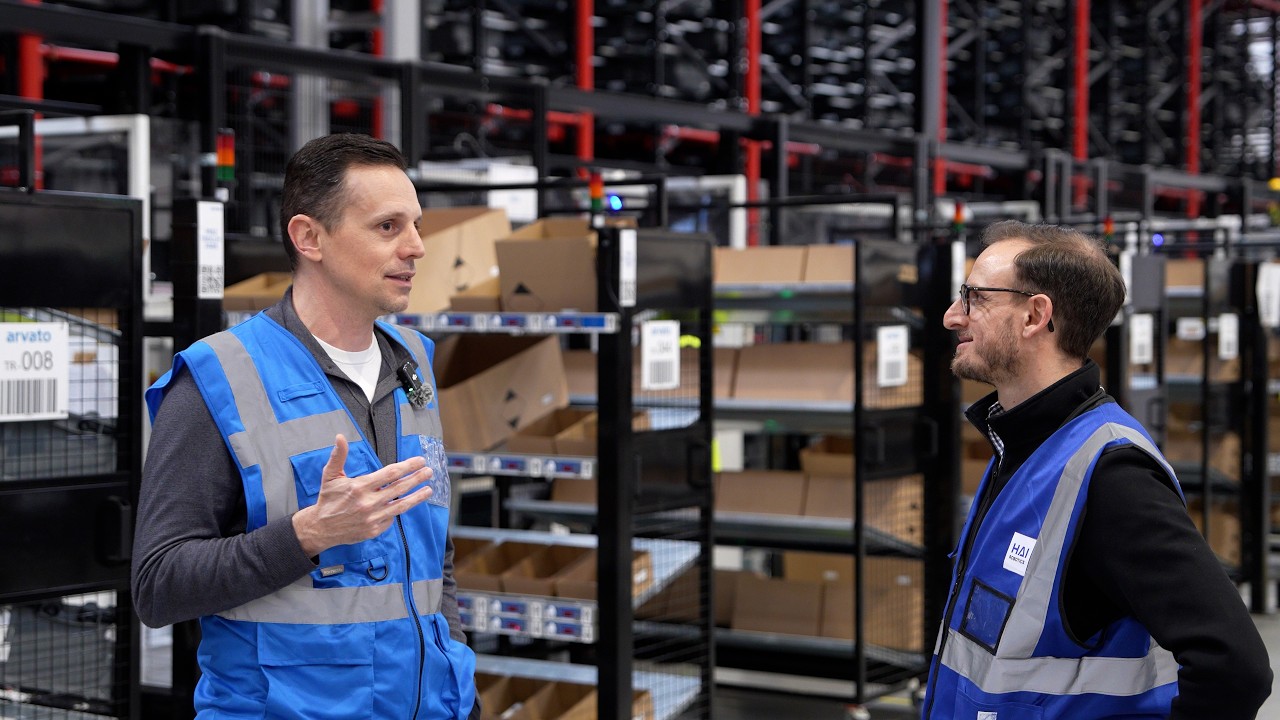
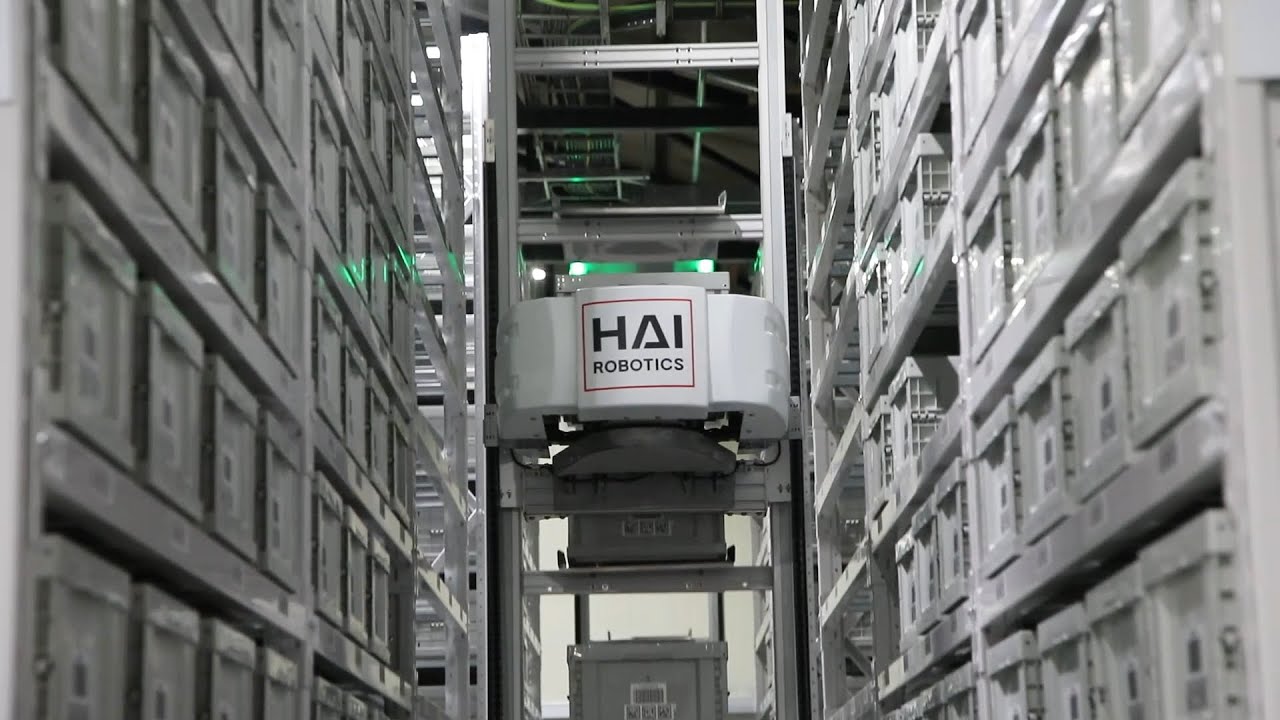
The core of the St. Luke's CSC is Hai Robotics' HaiPick System 1, an Autonomous Case-handling Robot (ACR) system that operates on the goods-to-person principle. Unlike traditional goods-to-person systems that move entire racks (as in AutoStore or shuttle-based systems), the HaiPick ACR robots are designed to identify and retrieve individual totes or cartons from within a racking structure, bringing only the required item to the operator workstation. This approach provides high storage density while maintaining flexible, item-level access.
Within the facility, HaiPick ACR robots navigate autonomously through the storage grid, locate the correct tote based on system-directed task assignments, retrieve it, and transport it to an ergonomic operator workstation. After the operator fulfills the required picks, the robot returns the tote to its storage location. This closed-loop, automated cycle runs continuously, enabling the facility's headline throughput of 650+ outbound totes per hour.
Momentum WES: Next-Generation Warehouse Execution and Control
Vendor: Honeywell Intelligrated
Key Features
The facility's 18,600+ storage locations provide the inventory depth required to support a multi-hospital healthcare network from a single centralized hub, reducing the need for distributed on-site storage at individual care facilities and enabling more efficient procurement and replenishment cycles.
The 650+ outbound totes per hour throughput capacity ensures that St. Luke's can meet the time-sensitive fulfillment demands of an active healthcare network, where supplies may need to be dispatched urgently to clinical settings. This level of throughput, delivered through automation rather than manual labor, also provides consistent performance regardless of staffing fluctuations.
The greenfield design approach is a distinguishing feature of this project. By building the Consolidated Services Center from scratch with automation embedded from the start, St. Luke's avoided the constraints and compromises inherent in retrofitting automation into an existing facility. The building layout, ceiling heights, floor specifications, and utility infrastructure were all optimized for the HaiPick system's requirements.
Improved accuracy and visibility are outcomes that carry particular weight in healthcare. The automated system tracks every tote movement in real time, providing St. Luke's with a live picture of inventory status and order fulfillment progress — a significant upgrade over manual processes where inventory discrepancies and fulfillment errors are harder to detect and correct.
Safer, ergonomic workflows replace the manual picking and heavy lifting tasks that characterize traditional healthcare warehouse operations. By bringing goods to operators rather than sending operators to goods, the HaiPick system reduces physical strain, lowers injury risk, and creates a more sustainable working environment for warehouse staff.
Results & Benefits
The St. Luke's Consolidated Services Center delivers measurable outcomes across three dimensions. In terms of capacity, the facility provides 18,600+ storage locations — sufficient to centralize medical supply inventory that would previously have been distributed across multiple less-efficient storage points within the healthcare network. In terms of throughput, the 650+ outbound totes per hour rate ensures that fulfillment operations can keep pace with the demands of an active multi-site healthcare organization. In terms of operational quality, the combination of automated accuracy, real-time visibility, and ergonomic workstation design delivers a step-change improvement over the manual processes it replaces.
Beyond the quantitative metrics, the project delivers a strategic benefit: St. Luke's now has greater control over its own healthcare supply chain. By operating a purpose-built, automated Consolidated Services Center rather than relying on less structured distribution arrangements, the organization is better positioned to manage costs, respond to supply disruptions, and maintain the service levels required to support patient care.
Challenges & Solutions
The most fundamental challenge of this project was the high-stakes nature of healthcare fulfillment itself. Errors in medical supply distribution — wrong items, wrong quantities, delayed shipments — can have direct consequences for patient care. The HaiPick System 1's automated, software-directed picking process addresses this by removing the variability inherent in manual picking and providing real-time inventory tracking that makes discrepancies visible and correctable immediately.
The decision to build a greenfield facility also presented planning and design challenges: the project required close coordination between St. Luke's, Hai Robotics, and Equipment Depot to ensure that the building design, automation architecture, and operational workflows were aligned from the earliest stages of the project. This integrated approach — treating the automation system as a core building component rather than a post-construction addition — is what enabled the facility to achieve its storage density and throughput targets from day one of operation.
System Integrator
Hai Robotics provided the HaiPick System 1 ACR automation platform, including robots, racking, workstations, and the software layer that orchestrates the system. Established in 2016, Hai Robotics is the developer of the world's first Autonomous Case-handling Robot (ACR) system and has deployed its solutions across a wide range of industries globally, including apparel, electronics, manufacturing, and — with the St. Luke's project — healthcare. More information is available at hairobotics.com.
Equipment Depot served as the material handling solutions partner for the project, supporting the physical implementation and integration of the automation system within the new facility.
Related Technologies (6)
HaiPick Climb (Upgraded): High-Density Storage with Rack-Climbing ACR Technology
byHai Robotics
Momentum WES: Next-Generation Warehouse Execution and Control
byHoneywell Intelligrated
Goods-to-Person ACR Solution for Warehouse Modernization
byHai Robotics
HaiPick Climb System: Goods-to-Person Warehouse Automation
by Hai Robotics
MIX: All-round Goods-to-Person Picking Solution
byMushiny
Box-IT: Ergonomic Goods-to-Person Workstation
byAddverb
Related Knowledge Articles (2)
Goods-to-Person Systems
Goods-to-Person (G2P) systems revolutionize warehouse operations by bringing inventory directly to stationary picking stations, eliminating worker travel time and maximizing productivity. These automated systems combine storage, retrieval, and presentation technologies to create highly efficient picking environments.
AMR Goods-to-Person
AMR goods-to-person systems use autonomous mobile robots to transport inventory from storage locations to picking stations, eliminating worker travel time and dramatically improving order fulfillment efficiency.
Related Projects
More from Hai Robotics
St. Luke's Transforms Healthcare Fulfillment from the Ground Up
Li-Ning – Fulfillment Center Transformation in 1 Month with HaiPick Climb